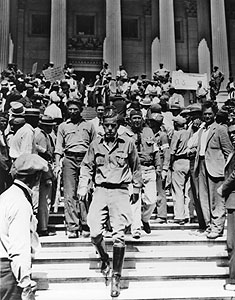
My last post in this series gave you an overview of what the bonus army was, and how desperate families made a march across the continent for a peaceful showdown (hmmmm….I seem to recall having the right to peacefully assemble….did I just imagine that?) with the government that they felt had done them wrong. I will leave the post here: https://wordpress.com/post/tiredmidnightblogger.com/6251
In this post I intend to tell the result of that march, and admit to my readers that several of the hero’s of my youth have turned out to be bitter disappointments. Follow along if you are brave enough.
The Standoff
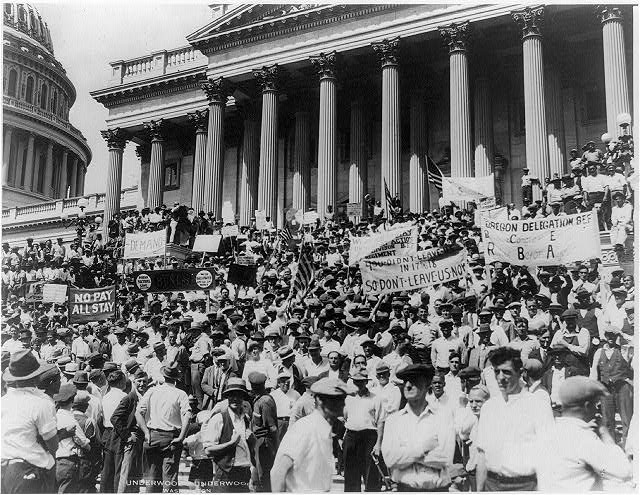
I ended the last post with this quote: Britannica.com shares: “In an effort to force early lump-sum payment of these urgently needed benefits, the Bonus Army, sometimes called the “Bonus Expeditionary Force,” converged on the nation’s capital in the spring of 1932; they moved into abandoned shacks below the Capitol and set up shanties and tents along the Anacostia River. Despite inadequate housing, sanitation, and food, the movement’s leader, Walter W. Waters, managed to maintain order and to oust agitators.” This was nothing like January 6. This truly WAS a groundswell of the common people. Not only did the President NOT call for this protest, he was vehemently opposed to it.
Walter Waters in Command, or Another Sgt. Malcom Reynolds
https://www.oregonencyclopedia.org/articles/bonus_army/ has this to say about Waters: “It was in Portland that Walter W. Waters, a native Oregonian, first emerged as a forceful and colorful leader of the Bonus Army movement. Born and raised in Burns, Sergeant Waters had served in France and had seen combat at Saint Mihiel and Chateau-Thierry. With the onset of the Depression, Waters’s small business endeavors failed; he survived as a “fruit tramp” before coming to Portland. Waters took easily to public speaking; and with veterans calling for “the Bonus now,” he promoted the idea of a veterans’ march to present their demand to Congress.”
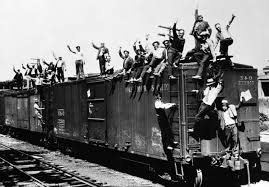
There had been several similar movements, and not all of them had been peaceful or orderly. According to PBS.org: “From the start, 1932 promised to be a difficult year for the country, as the Depression deepened and frustrations mounted. In December of 1931, there was a small, communist-led hunger march on Washington; a few weeks later, a Pittsburgh priest led an army of 12,000 jobless men there to agitate for unemployment legislation. In March, a riot at Ford’s River Rouge plant in Michigan left four dead and over fifty wounded. Thus, when a band of jobless veterans, led by a former cannery worker named Walter W. Waters, began arriving in the capital in May, tensions were high. Calling themselves the “Bonus Expeditionary Forces,” they demanded early payment of a bonus Congress had promised them for their service in World War I.”
As we all know, a few bad apples can spoil the whole barrel. PBS.org continues: “Army Chief of Staff MacArthur was convinced that the march was a communist conspiracy to undermine the government of the United States, and that “the movement was actually far deeper and more dangerous than an effort to secure funds from a nearly depleted federal treasury.” But that was simply not the case. MacArthur’s own General Staff intelligence division reported in June that only three of the twenty-six leaders of the Bonus March were communists. And the percentage within the rank and file was likely even smaller; several commanders reported to MacArthur that most of the men seemed to be vehemently anti-Communist, if anything. According to journalist and eyewitness Joseph C. Harsch, “This was not a revolutionary situation. This was a bunch of people in great distress wanting help…. These were simply veterans from World War I who were out of luck, out of money, and wanted to get their bonus — and they needed the money at that moment.” “
For a few months Waters was able to maintain the peace by disciplining and organizing his “troops” in the same ways they had lived as soldiers during the war. I don’t know, but I suspect there was a comfort in this. Like the dough boys had come home. Like maybe there was still some fire in the old boys who had, in our collective American minds at least, paid the debt back to Lafayette. A bill passed in the Congress, and even though Hoover promised to veto it, there was still a great deal of hope that America would listen to reason. On June 17, the bill was defeated in the Senate.
How it All Ended
Historyonthenet.com shares this: “
Within days of his arrival, Walter Waters had a full-blown lobbying operation under way. On June 4, the B.E.F. marched in full force down the streets of Washington. Veterans filled their representative’s waiting rooms, while others gathered outside the Capitol building. On June 14, the bonus bill, opposed by Republicans loyal to President Hoover, came to the floor. When Congressman Edward E. Eslick (D-TN) was speaking in support of the bill, he suddenly fell dead from of a heart attack. Thousands of Bonus Army veterans marched in his funeral procession, while congress adjourned out of respect. The following day, June 15, the House of Representatives passed the bonus bill by a vote of 211 to 176.”
On the 17th, about 8,000 veterans gathered at the Capitol, feeling confident that the Senate would pass the bill. Another 10,000 were stranded behind the Anacostia drawbridge, which police had raised to keep them out of the city. Debate continued into the evening. Finally, around 9:30, Senate aides summoned Waters inside. He returned moments later to break the news to the crowd: the bill had been defeated. For a moment it looked as if the veterans would attack the Capitol. Instead, at the suggestion of a reporter, Waters asked the veterans to sing “America”. When the song was over, they slowly filed back to camp.”
Many veterans left in defeat. Many thousands remained, having no homes to return to, they were determined to stay until the government decided to pay the bonuses, or to provide jobs. As the Washington summer got hotter, so did tempers. It was only a matter of time before something happened.
Historyonthenet.com continues: “As the weeks passed, conditions at the camp worsened. Evalyn Walsh McLean contacted Vice President Charles Curtis, who had attended dinner parties at her mansion. “Unless something is done for these men, there is bound to be a lot of trouble,” she told him. McLean’s efforts backfired. Vice President Curtis became paranoid when he saw veterans near his Capitol Hill office on the anniversary of the day the mobs stormed France’s Bastille. President Hoover, Army Chief of Staff MacArthur, and Secretary of War Patrick J. Hurley, increasingly feared that the Bonus Army would turn violent and trigger uprisings in Washington and elsewhere. Hoover was especially troubled by the veterans who occupied abandoned buildings downtown.
“On July 28, on President Hoover’s orders, Police Chief Glassford arrived with 100 policemen to evict them. Waters informed Glassford that the men had voted to remain. Just after noon, a small contingent of vets confronted a phalanx of policemen near the armory, resulting in a quick, but violent skirmish. Veterans threw bricks while policemen used their nightsticks. Shortly after 1:45 p.m. another fight broke out in a building adjacent to the armory. Shots rang out. When it ended, one veteran lay dead, another mortally wounded. Three policemen were injured.
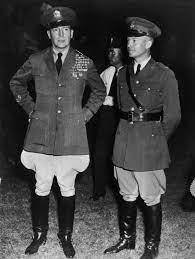
“At this point, Army Chief of Staff General MacArthur had had enough. He decided to put their practiced plan into action, and assumed personal command. For the first time in the nation’s history, tanks rolled through the streets of the capital. MacArthur ordered his men to clear the estimated 8,000 veterans from the downtown area, and spectators who had been drawn to the scene by radio reports.”

According to PBS.org “President Hoover ordered the Secretary of War to “surround the affected area and clear it without delay.”
“Conspicuously led by MacArthur, Army troops (including Major George S. Patton, Jr.) formed infantry cordons and began pushing the veterans out, destroying their makeshift camps as they went. Although no weapons were fired, cavalry advanced with swords drawn, and some blood was shed. By nightfall, hundreds had been injured by gas (including a baby who died), bricks, clubs, bayonets, and sabers.
“Next came the most controversial moment in the whole affair — a moment that directly involved General MacArthur. Secretary of War Hurley twice sent orders to MacArthur indicating that the President, worried that the government reaction might look overly harsh, did not wish the Army to pursue the Bonus Marchers across the bridge into their main encampment on the other side of the Anacostia River. But MacArthur, according to his aide Dwight Eisenhower, “said he was too busy,” did not want to be “bothered by people coming down and pretending to bring orders,” and sent his men across the bridge anyway, after pausing several hours to allow as many people as possible to evacuate. A fire soon erupted in the camp. While it’s not clear which side started the blaze, the sight of the great fire became the signature image of the greatest unrest our nation’s capital has ever known.”
Three of my military heroes were involved with attacking fellow WWI soldiers. I don’t even know what to say.
The Aftermath
Historyonthenet.com shares this as the ending: “Eyewitnesses, including MacArthur’s aide Dwight D. Eisenhower (later Supreme Allied Commander of WWII and two-term President of the United States), insisted that Secretary of War Hurley, speaking for the president, had forbade any troops to cross the bridge into Anacostia and that at least two high-ranking officers were dispatched by Hurley to convey these orders to MacArthur. Eisenhower later wrote in his book, At Ease, that MacArthur, “said he was too busy and did not want either himself or his staff bothered by people coming down and pretending to bring orders.” Eisenhower put it more bluntly during an interview with the late historian Stephen Ambrose. “I told that dumb son-of-a-bitch he had no business going down there,” he said.
“Around 11:00 p.m., MacArthur called a press conference to justify his actions. “Had the President not acted today, had he permitted this thing to go on for twenty-four hours more, he would have been faced with a grave situation which would have caused a real battle,” MacArthur told reporters. “Had he let it go on another week, I believe the institutions of our Government would have been severely threatened.”
“Over the next few days, newspapers and newsreels (shown in movie theaters) showed graphic images of violence perpetrated on once uniformed soldiers (and their families), those who had won the First World War, by uniformed servicemen. In movie theaters across America, the Army was booed and MacArthur jeered. The incident only further weakened President Hoover’s chances at re-election, then only three months away. Franklin, D. Roosevelt won easily.”
Waters attempted to maintain control of the movement, but his efforts too closely echoed another ex WWI soldier who profoundly succeeded at leading similar protests in Germany. He faded into obscurity, and enlisted in the Navy when we entered WWII. He died unsung.
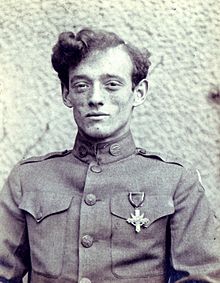
Patton had been involved in the repression of the Bonus Army. The next day he was approached by a decorated hero of the battle Meuse-Argonne offensive, in which Patton, and Waters had both seen action. Joseph T. Angelo, who had been decorated for saving Patton’s life, appealed to Patton to have mercy on their fellow veterans. Patton commanded the man be removed from his presence. The media took this story and made it the symbol for the entire debacle.
Britannica.com shares: “A second Bonus Army came in May 1933 and this time was greeted by the new president’s wife, Eleanor Roosevelt, and presidential assistant Louis Howe. Although again no bonus legislation was passed, Congress did create the Civilian Conservation Corps, in which many of the veterans were able to find work.”
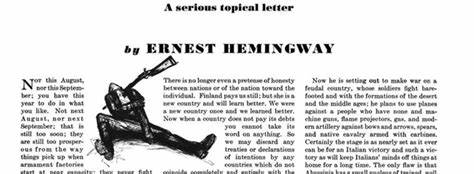
FDR gained political clout by praising the Bonus Army, but in truth he saw them as an annoying rabble. Historyonthenet.com shares this: “For each of the next four years, veterans returned to Washington, D.C., to push for a bonus. Many of the men were sent to rehabilitation camps in the Florida keys. On September 2, 1935, several hundred of them were killed in a hurricane. The government attempted to suppress the news, but the writer Ernest Hemingway was aboard one of the first rescue boats, and he wrote an angry piece about it. Resistance to the bonus withered. Finally, in 1936, the veterans received their bonus.”
Britannica.com shares that “In 1936, however, Congress finally passed, over a presidential veto, a bill to disburse about $2 billion in veterans’ benefits. The Bonus Army laid the foundation for the G.I. Bill of Rights (1944).”
In my next post, I intend to write about other similar times when America let her troops down. Stay tuned for more tired blogging!
Other works cited: https://www.americanheritage.com/when-bonus-army-marched-dc-0
https://www.historyonthenet.com/hoover-depression-bonus-army
https://en.wikipedia.org/wiki/Bonus_Army
https://www.historyonthenet.com/patton-ww1
https://www.britannica.com/event/Battle-of-Saint-Mihiel-1918
https://www.pbs.org/wgbh/americanexperience/features/macarthur-bonus-march-may-july-1932/
https://www.britannica.com/event/Bonus-Army

 Tired Midnight Blogger (What Blogs at Midnight)