In my last two posts I revealed how the US treated World War I vets contemptibly, paying them low wages after forcing them to fight in a war, and then when it was pointed out they lost enormous amounts of money by going to fight, ignoring their plight until the Bonus Army marched on Washington DC. I will leave those links here:
https://wordpress.com/post/tiredmidnightblogger.com/6251
https://wordpress.com/post/tiredmidnightblogger.com/6298
Should you prefer to watch the YouTube videos I made about them, you may watch them here:
I wish I could say this was the only time America treated her soldiers shabbily. And I had NEVER HEARD that American veterans had ever marched on the Capital, peacefully or with more warlike intent. But the truth is, our nations capital has faced threats far more dangerous, and with causes far more just, than the January 6 incident. Let me tell you another story about times American veterans marched in protest, and we shall see that politicians have all too often left our soldiers out to rot when the wars and the victory parades were over.
Why SHOULD You Get Paid?
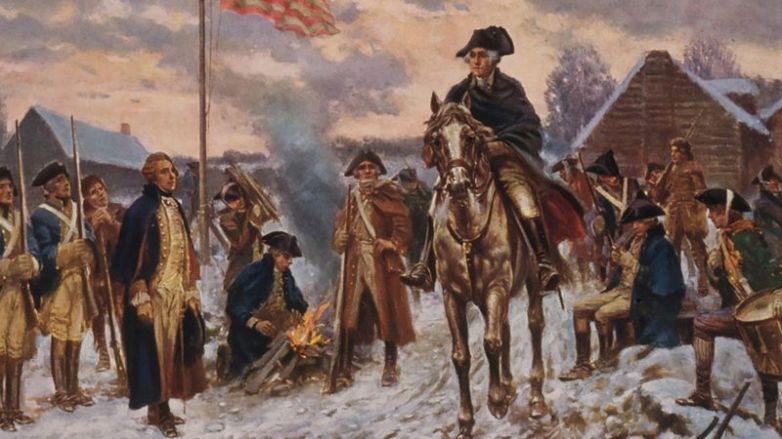
School taught me that the American Revolution was fought by honorable men. That George Washington could not tell a lie. And while I learned a little about the terrible suffering at Valley Forge, I really had (and likely still don’t have) any real idea of what the Revolutionaries went through to win our independence. This blog is a quest for truth though, and so let us look at the truths to be found in history, wherever the facts may lead us.
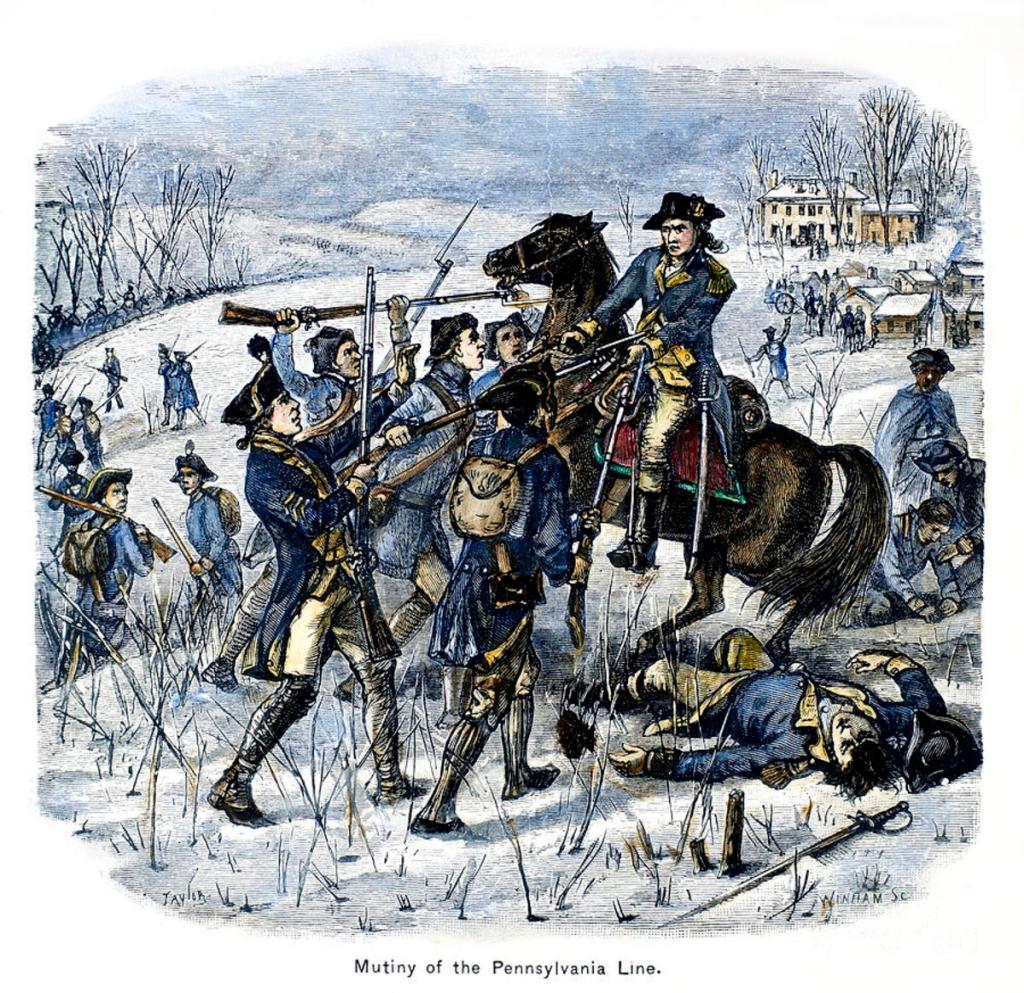
I’m finding different versions of the story. I will attempt to share the different versions without meaning to confuse. On New Years Day of 1781, “the Continental troops of the Pennsylvania Line mutinied at Morristown, New Jersey” (libraries.psu.edu). History.com paints an even graver picture of the situation: “1,500 soldiers from the Pennsylvania Line—all 11 regiments under General Anthony Wayne’s command—insist that their three-year enlistments are expired, kill three officers in a drunken rage and abandon the Continental Army’s winter camp at Morristown, New Jersey.”
The Major General in command, Mad Anthony Wayne, who had led them with a bravery, a determination, and a ruthlessness that earned him his moniker, had led them through some pretty tough times, but the terms under which the men had signed up were in no way being honored. They had served their time, and by the traditions of war then in place, they were not honor bound to reenlist their services. And let’s face it…how happy would YOU be with your organization if you had not been paid in three years?
According to https://libraries.psu.edu/ trouble had been brewing for some time. Indeed, almost from the start there were drastic shortages in food and supplies that discouraged even the most patriotic.
“Whatever shortages were created by a fledgling wartime economy were compounded by government corruption and ineptitude. In writing Congress, Washington accused the quartermaster-general of corruption and sought his removal. Anthony Wayne made similar accusations in letters to the Pennsylvania executive council. In January, 1778, Wayne wrote that, after buying cloth at his own expense, the government stalled his efforts to have uniforms produced.”
None other than the Father of our country, George Washington himself, called our Congress to account for the shabby equipping of the neophyte army.
“Whatever shortages were created by a fledgling wartime economy were compounded by government corruption and ineptitude. In writing Congress, Washington accused the quartermaster-general of corruption and sought his removal. Anthony Wayne made similar accusations in letters to the Pennsylvania executive council. In January, 1778, Wayne wrote that, after buying cloth at his own expense, the government stalled his efforts to have uniforms produced.” (libraries.psu.edu)
Wheels Within Wheels, Revolution Within Revolution
Things only got worse, and Congress then, as now, refused to act, choosing instead to pass the buck to the States. Some states did step up to the plate and rewarded their troops handsomely. Others evidently felt freedom should come cheep. Eventually this led, ironically, to passive aggressive forms of 18th century not so quiet quitting.
“One hundred men from the Massachusetts Line marched out of West Point on January 1st, 1780, but were returned to their stations shortly thereafter. On May 25th, a mutiny occurred in the Connecticut Line. Soldiers had been going without their meat ration, only eating the rations which their officers gave up. The efforts of Colonel Return Jonathan Megis, and two Pennsylvania Colonels, Thomas Craig and Walter Stewart, quelled the revolt. Pennsylvania troops stood with the Colonels, although when the men found out what the Connecticut soldiers were doing, the Pennsylvanians wanted to join them.
“Private Joseph Martin, one of the Connecticut men, recalled that they gave up the mutiny but spent the night bantering about “starving in detail for an ungrateful people.”
“The Continental Army had 26,000 men in July 1779, but less than 15,000 by the following summer.(9) Some states vigorously sought to maintain enlistment by offering huge cash bounties to soldiers who reenlisted.”
“By 1781, many soldiers in the Pennsylvania Line had served for three years, having received from the state only a $20 bounty at enlistment. Furthermore, the real value of the soldiers’ bounty pay was depreciating significantly.”
Let’s see if I can put this in perspective. According to the site https://www.officialdata.org/us/inflation/1781 the value of $20 in 1781 would be roughly the same as $2,772.87. So…how would you feel if you were only paid $2,772.87 for three years labor? For some reason, some of these fellows felt the need to mutiny.
Hold the Line!
History.com shares this: “On January 1, 1781, 1,500 soldiers from the Pennsylvania Line—all 11 regiments under General Anthony Wayne’s command—insist that their three-year enlistments are expired, kill three officers in a drunken rage and abandon the Continental Army’s winter camp at Morristown, New Jersey.
“British General Henry Clinton sent emissaries from New York to meet the mutineers and offer them full pardon and the pay owed them by the Continental Army in exchange for joining the Redcoats. Instead, the men turned south towards Princeton, which they captured on January 3, intending to march on Philadelphia and Congress. From Princeton, the mutineers dispatched envoys to meet with General Wayne, who was following behind them. They aired their grievances and handed over Clinton’s men for eventual execution.
“With this show of devotion to the Patriot cause, the mutineers strengthened their position in negotiations with Congress. General Wayne and Congressional President Joseph Reed met with the mutineers to hear their grievances on January 7; they came to an agreement three days later.”
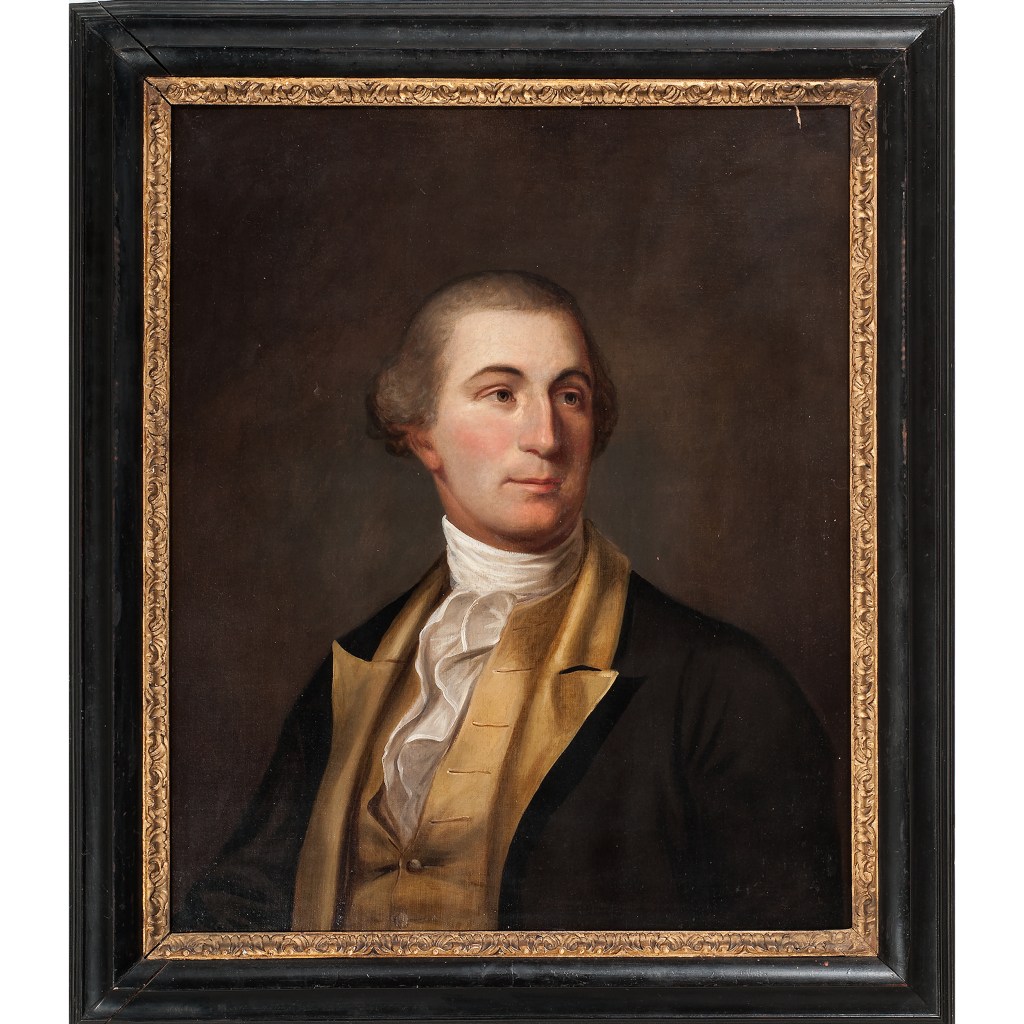
Glad We Fixed That Problem
https://libraries.psu.edu/ tells us that the soldiers that remained from the Pennsylvania Line were critical in the triumphant battle of Yorktown, where the Revolution was won. “These same reasonable men contributed to the crucial victory at Yorktown only a few months later – if the mutiny had been more damaging, that legendary triumph might never have happened.”
Sadly, the story does not end there.
https://www.americanheritage.com/shares that after two years of continued enlistment after the war had been won “After the British surrendered at Yorktown in 1781, rumors spread throughout the ranks that the Continental Army would be demobilized without being paid. In June 1783, a small band of soldiers from the unit known as the Pennsylvania Line marched on the capital of the new nation in Philadelphia, demanding the back pay owed to them. They surrounded the State House and poked their bayonet-tipped muskets through the windows at the assembled Congress, which included such members as James Madison and Alexander Hamilton.”
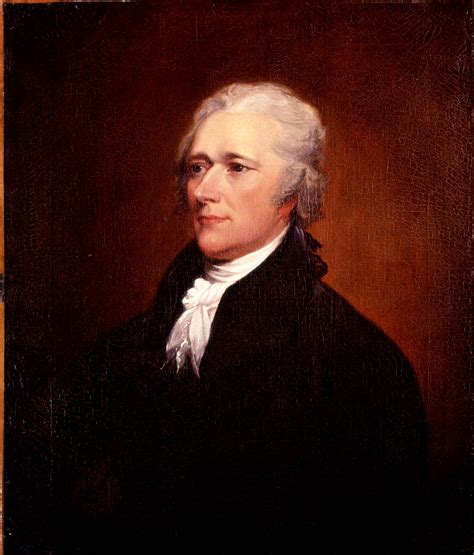
This time the Pennsylvania governor, a man evidently of less intestinal fortitude as Joseph Reed, fled Philadelphia post haste.
‘For weeks the soldiers held their ground. They grew into a mutinous mob of four hundred, making daily demands on the government and terrorizing the citizens of Philadelphia. Finally, after weeks of the renegade soldiers’ daily demonstrations and threats, George Washington sent a force of fifteen hundred Continental soldiers to compel the men to return to their homes. Two of the leaders of the mutiny were sentenced to be shot, led out to be executed, and faced a line of soldiers with loaded guns. At the last minute they were pardoned by Congress. Other leaders were whipped before being released.”
History is full of unintended consequences. This final mutiny was one of the events that convinced the Founding Fathers, for good or ill, that the Articles of Confederation were not adequate to the government of the federation. A stronger Constitution was needed, amassing more power from the States to the Federal government.
God help us all.
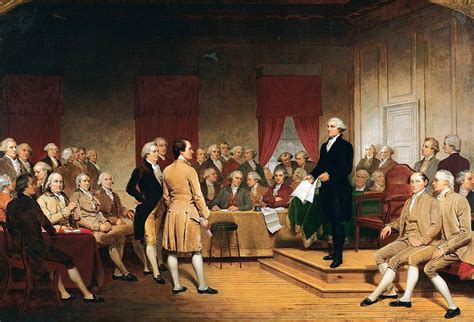
The End of Philadelphia as the Capital
https://www.americanheritage.com/ shares this: “
The mutiny had another consequence. During the Revolutionary War, Congress had retreated three times from Philadelphia — first to Baltimore, then to Lancaster, and then to York — to avoid capture by the British. But Congress had always returned to Philadelphia. After the 1783 mutiny and the humiliating departure, the members vowed never to return. They stayed at Princeton until the end of the year, then moved to Annapolis, followed by Trenton, and finally to New York.
“When the Constitutional Convention met in 1787, memories of 1783 were still so fresh in the delegates’ minds that they wrote a provision into the Constitution, providing for a new kind of capital — a federal enclave, which would become Washington, D.C., by the turn of the century.”
As always, I have my works cited, and will end with a video that, I think, helps solidify the point. Thank you, everyone, for your patience. I know it has been a long time since I posted. Please feel free to share what you think the next post should be about.
https://www.americanheritage.com/when-bonus-army-marched-dc-0
https://www.history.com/this-day-in-history/mutiny-of-the-pennsylvania-line
https://www.officialdata.org/us/inflation/1781

 Tired Midnight Blogger (What Blogs at Midnight)
Nicely done, very nicely done. This is an example of well researched reality.
LikeLiked by 1 person
Thank you so much for reading! What would you like to read next?
LikeLiked by 1 person