Author Archives: Curtiswselby
They say not to write a blog from a tired space, but I suffer from chronic fatigue syndrome, so frankly, everything I do is from a tired space. Likely I'm not doing the greatest job of search engine optimization. But I know there are others like me. Passionate about life.
Surely no connection
You only matter as a consumer, possibly as a producer or as an investor.
youtube.com/clip/UgkxWKrI8gZmQe0jI4Iyraw5isJaipAJjrzi
In the end, only money matters. People don’t.
War is the continuation of politics by other means. Carl von Clausewitz.
It has been a long journey, and I hope either in this post or in the next one to finally deliver the punchline. Below I will leave the links to the posts I’ve written on this subject, not in the order written, but in the order that (I think) will make the most sense for a new reader to read them in.
https://wordpress.com/post/tiredmidnightblogger.com/5265
https://wordpress.com/post/tiredmidnightblogger.com/5434
https://wordpress.com/post/tiredmidnightblogger.com/5308
https://wordpress.com/comments/all/tiredmidnightblogger.com/5348
https://wordpress.com/post/tiredmidnightblogger.com/5390
In my post entitled “All warfare is based on deception.” – Sun Tzu, The Art of War, I learned so much from an ex-mercenary named Sean McFate, that I’m rethinking several aspects of my world view. Until I read that post, I largely felt that mercenaries were dangerous (and likely they are, let’s face it, if someone has that on their resume, and have lived to tell the tale, that person is likely not a pushover), but my understanding of why and how they are dangerous was (and likely still is) uninformed and a little naive.
Before, I thought of mercenaries as mostly brutes, willing to do whatever it took to earn a profit and survive. Without honor, willing to change sides for a larger bid, willing to loot, rape, and flee in the face of superior fire power, leaving innocent women and children to die or starve as fate wills it.
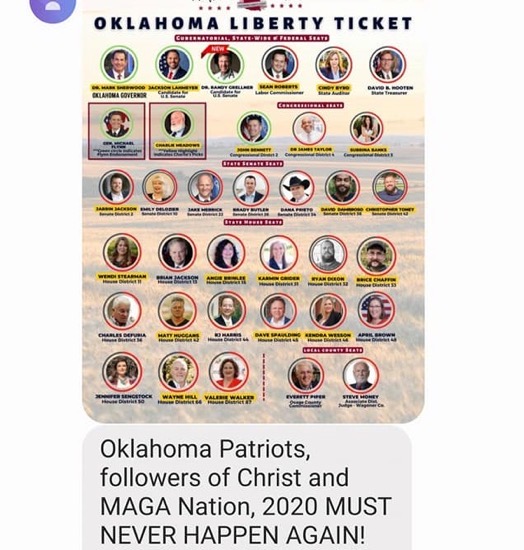
I’ve been struggling a lot lately with depression, discouragement, chronic fatigue. I say this, neither as apology nor as excuse. I just wish to let the community know (I received my 91st follower recently). This post will be a relaunch into the battle, a continuation of my series on the connection between Oklahoma politics and the current rise in mercenary activity, specifically, Erik Prince.
This post will simply establish a link in the chain. I’m going to introduce you to a gentleman named Michael Flynn.
But I’ve already gone too deep down the rabbit hole. I’m not here to tell you what to think, or what is right or wrong. I’m trying to share the context of why the things I’m about to share matter. I’m going to trace the line from Prince to Oklahoma.
Let’s begin. As always, the sites I will rely on for information are listed below. Feel free to let me know if I have missed anything.
https://www.biography.com/military-figures/michael-flynn
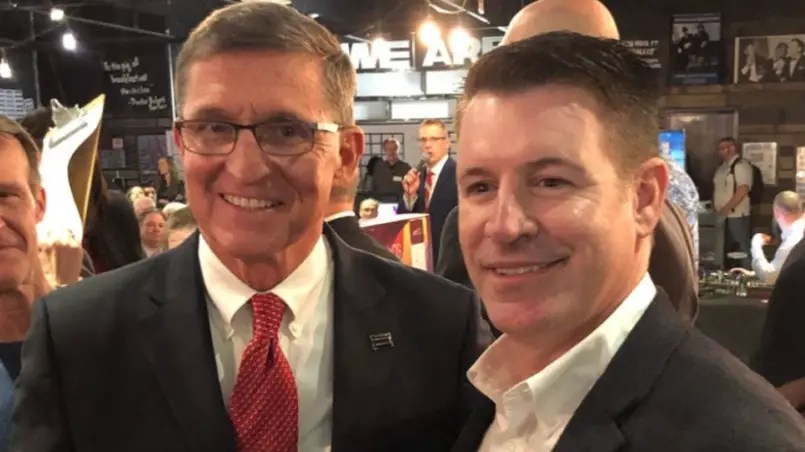
Michael Flynn, the Very Model, according to my Overpaid Assistant Cassie, of a Modern Major General.
There were quite a few dots to connect on this one. If I didn’t have inside help, I would have never been able to figure this fiasco out. We’ll start with Michael Flynn, the head of our list (after Erik Prince) of dramatis personae.
Michael Flynn is a person of interest for several reasons. His tenure as NSA director was competitive with the reign of the Lady Jane Grey of England (you know, the shortest reigning monarch of English history). He did outlast her by almost two weeks, and he also didn’t lose his head. At least, not literally.

So who is General Flynn? Honestly, it depends on what you read whether he is a hero or a villain. As usual, I suspect the truth is somewhere in between.
According the biography.com “Michael Flynn began his 33-year Army career as a second lieutenant in military intelligence. After three years as intelligence chief of the JSOC in Iraq, he returned stateside for top bureaucratic posts but was forced out as director of the Defense Intelligence Agency in 2014. Flynn emerged as a strong supporter of presidential candidate Donald Trump in 2016, and was named Trump’s national security adviser in November. He resigned after 24 days in office over the revelation of his contact with the Russian ambassador, and subsequently faced legal problems related to his lobbying interests and failures to disclose information. In December 2017, he pleaded guilty to lying to the FBI about his conversations with the Russian ambassador.” Most of my digging has simply led me confused. Why would it matter if he talked to an ambassador, even a Russian one? What lies did he tell the FBI. And if if he pled guilty, how is it he is hanging out with a fellow Tulsan?

As a boy he was disruptive and a bit rebellious, but he learned discipline in sports. While he became a general, he did not climb the standard political path of a West Point graduate. Instead he “enrolled at the University of Rhode Island, where he joined the ROTC program and earned a degree in management science in 1981.”
“After graduation, Flynn joined the U.S. Army and was commissioned a second lieutenant in military intelligence. He was assigned to Fort Bragg in North Carolina, from where he was deployed as a platoon leader to Grenada in 1983.”
Flynn and Islam
In The Providence Journal we read of how the Iranian Hostage crisis of the late seventies had an enormous impact on the mindset of the young cadet (honestly, I think it left a mark on nearly all of us who remember it).
“An unprecedented act of terrorism with a presidential response some criticized as weak, the Iran hostage crisis undoubtedly influenced Flynn. Elements of his later conviction that “radical Islam” and ISIS pose deadly threats to America are found in an article in the Nov. 25, 1980, Good 5 Cent Cigar, the school newspaper.
“Headlined “Iran revolt due to return of Islam,” the article summarized a lecture by a visiting professor who discussed the 1980 revolution in which the Shah was overthrown.
“A deep-seated resentment to the monarchy and the West” had developed, the professor said.
“Having defeated liberal Democrat Jimmy Carter in the November 1980 election, conservative Republican Ronald Reagan took office in January 1981, as Flynn was starting his final semester.”
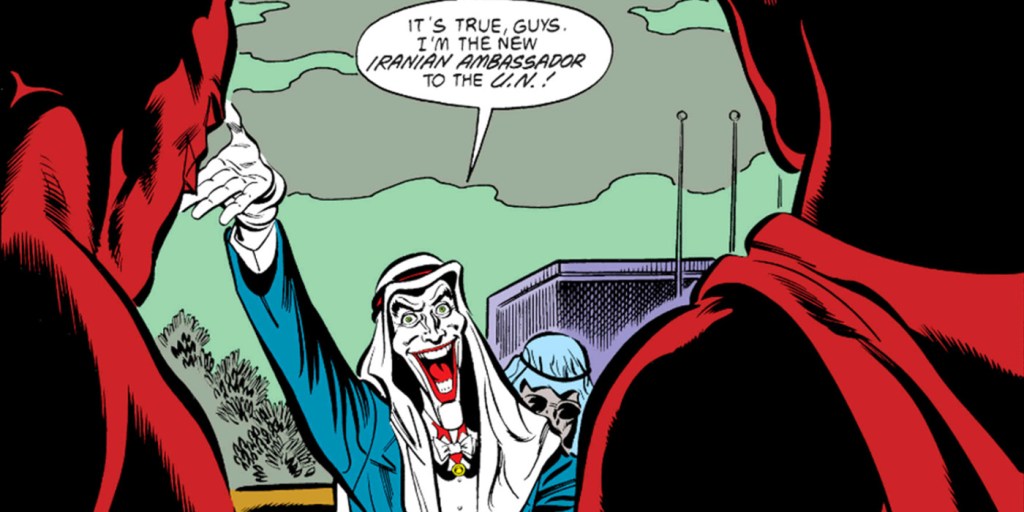
The Journal continues: “Flynn’s first assignment, as a paratrooper with the 82nd Airborne Division at Fort Bragg, N.C., was the beginning of many others around the U.S. and in Grenada, Haiti, Operation Iraqi Freedom and Afghanistan. Flynn would receive the Legion of Merit and Bronze Star Medal, among many other decorations. He would rise to lieutenant general.”
Biography.com shares “Flynn received a steady string of promotions as he rotated from posts at Schofield Barracks in Hawaii, Fort Polk in Louisiana and Fort Huachuca in Arizona. Additionally, he was named chief of joint war plans for the American invasion of Haiti in 1994.”
Then 9/11 hit. Biography.com continues: “He served as director of intelligence for Joint Task Force 180 in Afghanistan until 2002, and commanded the 111th Military Intelligence Brigade for another two years.
“In 2004, Commander Stanley McChrystal appointed Flynn director of intelligence for the Joint Special Operations Command (JSOC) in Iraq. Taking advantage of technological resources, Flynn mined cell phone data and utilized drones to infiltrate terrorist cells, and was credited with largely disrupting Al Qaeda activity in the area.
“Returning stateside after three years, Flynn became director of intelligence for United States Central Command and then the Joint Staff. In 2009, after McChrystal took command of U.S. forces in Afghanistan, he again placed his old colleague in charge of intelligence. Flynn followed with a report that criticized American operations in the region, a move that rankled supervisors.
The End of the Innocence
“After a stint in the office of National Intelligence, Flynn became director of the Defense Intelligence Agency in 2012. He attempted to reorganize the agency but instead alienated many subordinates, and was informed he would not remain for the normal three-year term. In August 2014, he retired after 33 years in the military, with the rank of lieutenant general.”

Various sources tell various stories. Some say that he was set up by angered subordinates who did not share his vision of the Defense Intelligence Agency. Others say he had upset his superiors, including Obama. In the end, it didn’t matter. An illustrious career was ended in forced retirement, whether for good or ill.
Biography.com continues: “Back in the private sector, Flynn formed the Virginia-based Flynn Intel Group, which offered private intelligence and security services, and he signed on with a speakers’ bureau. He also made the rounds as a television analyst, including appearances on the Russian state network RT. In late 2015, he sat next to Russian president Vladimir Putin at an RT banquet.
“After three decades spent largely behind the scenes, Flynn surprised former colleagues with his sudden outspokenness and turn toward more extreme positions. He tweeted “Fear of Muslims is RATIONAL” in February 2016, and that summer he co-authored a book, The Field of Fight, on how to combat radical Islam. At the 2016 Republican National Convention, he whipped the crowd into a frenzy over the transgressions of Democratic candidate Hillary Clinton, leading the chant of “lock her up!”
“After serving as Republican nominee Donald Trump’s go-to man for national security issues over the final months of the campaign, Flynn was rewarded with the post of national security adviser in November 2016.”
So we have two men, deep in the military, deep in the spook world of intelligence, both dishonored in the eyes of the world, both enormous Trump supporters, both with Private security companies. So what is the big deal?

After Obama disgraced him, and Colin Powel wrote some scathing opinions of Flynn’s alleged abuses of his subordinates, he got right with God, and became an energetic crusader for Trump. He was one of the earliest to chant “Lock her up” about Hilary Clinton. He was so deep into the campaign many felt he would be Donald Trump’s pick for Vice President.
In typical spook fashion, both Prince and Flynn have confusing ties to the Russian Intelligence organizations. This was the cause of General Flynn’s rather precipitous fall from grace, yet again, only this time from a President he had helped elect.
The new National Security Advisor “Flynn came under fire almost immediately after the election, beginning with a report that he had lobbied for Turkish interests during the U.S. presidential campaign. It was soon revealed that, prior to taking office, he had contact with Russian ambassador Sergey Kislyak over President Barack Obama‘s recently issued sanctions. Flynn subsequently resigned on February 13, 2017, after just 24 days as national security adviser, the shortest tenure in the history of the position.”
Once again, what is the big deal? Why would you resign after talking to an Ambassador? I know if I ever attain to a Cabinet position, I won’t resign for anything short of somebody finding out that the skeletons in my closet are all (censored).
This is where the story gets thorny and very difficult for a Tired Blogger to share much more than conjecture.
I present to you exhibit A, the website to the Flynn Intel Group that has been taken down, and is no longer on the Internet Archive:
http://thememoryhole2.org/blog/flynn-intel
There are other sites that I’m seeking, I am hoping some of my readers who have some vague ideas about where all of this is going would be willing to lend some tech support and scour the internet for other lost sites, but I found this one, anyway.
According to the website, the company partnered with “the best, brightest, and most elite companies in the world.” I tried to discover a link between the company and Blackwater. What I found instead was this:
https://www.huffpost.com/entry/michael-flynn-nso-group-spyware_n_59468386e4b06bb7d273c398
The Best and the Brightest
According to Huffpost.com: “While serving as a top campaign adviser to Donald Trump, Flynn worked with firms linked to NSO Group — which develops spyware and sells it to governments.”
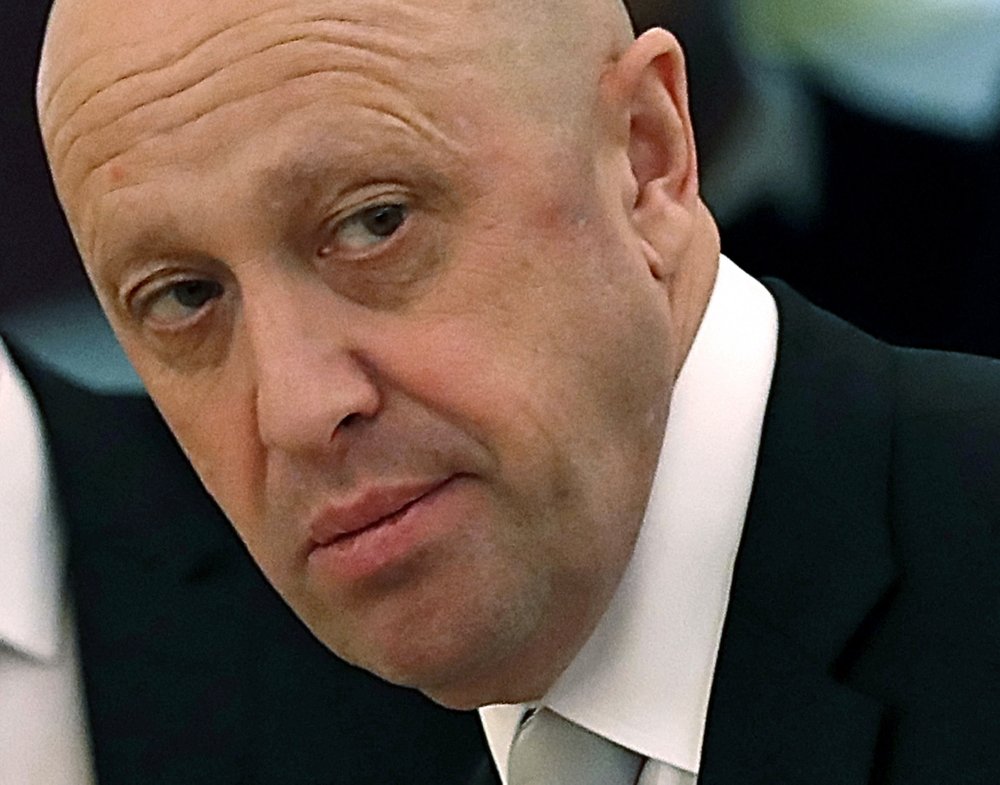
Huffpost continues: “Nor was Flynn’s work with foreign entities while he was advising Trump limited to his Ankara deal. He earned nearly $1.5 million last year as a consultant, adviser, board member, or speaker for more than three dozen companies and individuals, according to financial disclosure forms released earlier this year.
“Two of those entities are directly linked to NSO Group, a secretive Israeli cyberweapons dealer founded by Omri Lavie and Shalev Hulio, who are rumored to have served in Unit 8200, the Israeli equivalent of the National Security Agency.
“Flynn received $40,280 last year as an advisory board member for OSY Technologies, an NSO Group offshoot based in Luxembourg, a favorite tax haven for major corporations. OSY Technologies is part of a corporate structure that runs from Israel, where NSO Group is located, through Luxembourg, the Cayman Islands, the British Virgin Islands, and the U.S.
“Flynn also worked as a consultant last year for Francisco Partners, a U.S.-based private equity firm that owns NSO Group, but he did not disclose how much he was paid. At least two Francisco Partners executives have sat on OSY’s board.”
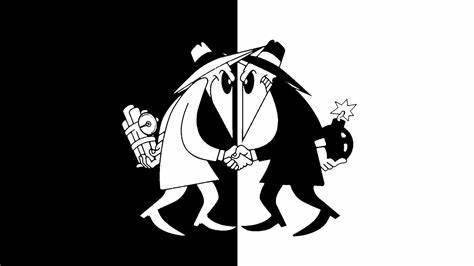
So he works with some bad guys? Does that make him a bad guy? Does this PROVE he worked with Erik Prince? Not yet. But does anyone else remember the cell phones Prince was selling? I’ll share a link to refresh your memories.
Ok, so on that note….”Many government and military officials have moved through the revolving door between government agencies and private cybersecurity companies. The major players in the cybersecurity contracting world ― SAIC, Booz Allen Hamilton, CACI Federal and KeyW Corporation ― all have former top government officials in leadership roles or on their boards, or have former top executives working in government.
But it’s less common for former U.S. intelligence officials to work with foreign cybersecurity outfits. “There is a lot of opportunity in the U.S. to do this kind of work,” said Ben Johnson, a former NSA employee and the co-founder of Obsidian Security. “It’s a little bit unexpected going overseas, especially when you combine that with the fact that they’re doing things that might end up in hands of enemies of the U.S. government. It does seem questionable.”
“What is clear is that during the time Flynn was working for NSO’s Luxembourg affiliate, one of the company’s main products — a spy software sold exclusively to governments and marketed as a tool for law enforcement officials to monitor suspected criminals and terrorists — was being used to surveil political dissidents, reporters, activists, and government officials. The software, called Pegasus, allowed users to remotely break into a target’s cellular phone if the target responded to a text message.
“Last year, several people targeted by the spyware contacted Citizen Lab, a cybersecurity research team based out of the University of Toronto. With the help of experts at the computer security firm Lookout, Citizen Lab researchers were able to trace the spyware hidden in the texts back to NSO Group spyware. After Citizen Lab publicized its findings, Apple introduced patches to fix the vulnerability. It is not known how many activists in other countries were targeted and failed to report it to experts.”
Going back to technologyreview.com “Unplugged’s day-to-day technology operations are run by Eran Karpen, a former employee of CommuniTake, the Israeli startup that gave rise to the now infamous hacker-for-hire firm NSO Group. There, Karpen built the IntactPhone, which the company called a “military-grade mobile device.” He’s also a veteran of Israel’s Unit 8200, an agency that conducts cyber espionage and is the country’s equivalent of the NSA.”
So…we have two people in two companies trying to market software developed by Israel’s Unit 8200. Still, as we have just read, there is quite a revolving door. It could easily still be coincidence.
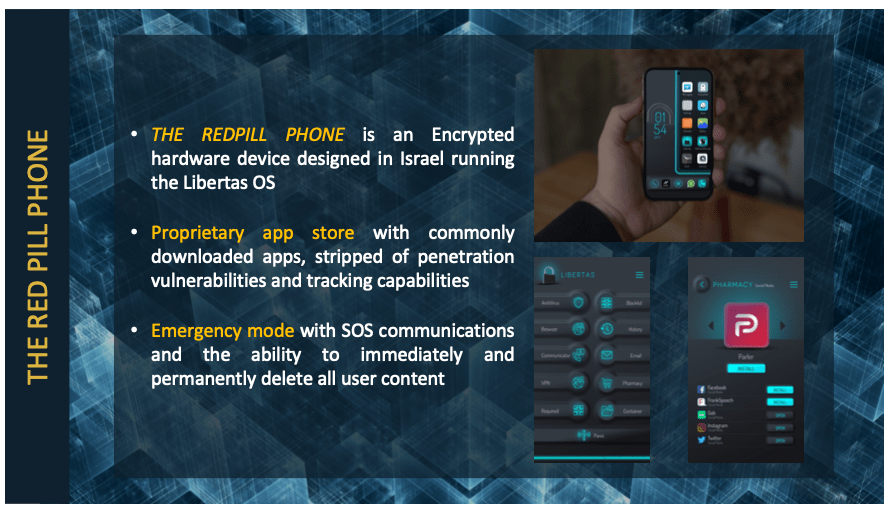
And then I finally found, if not a smoking gun, at least an amazing site that has gotten me almost halfway where I am trying to get my readers to.
In case you don’t wish to go there….
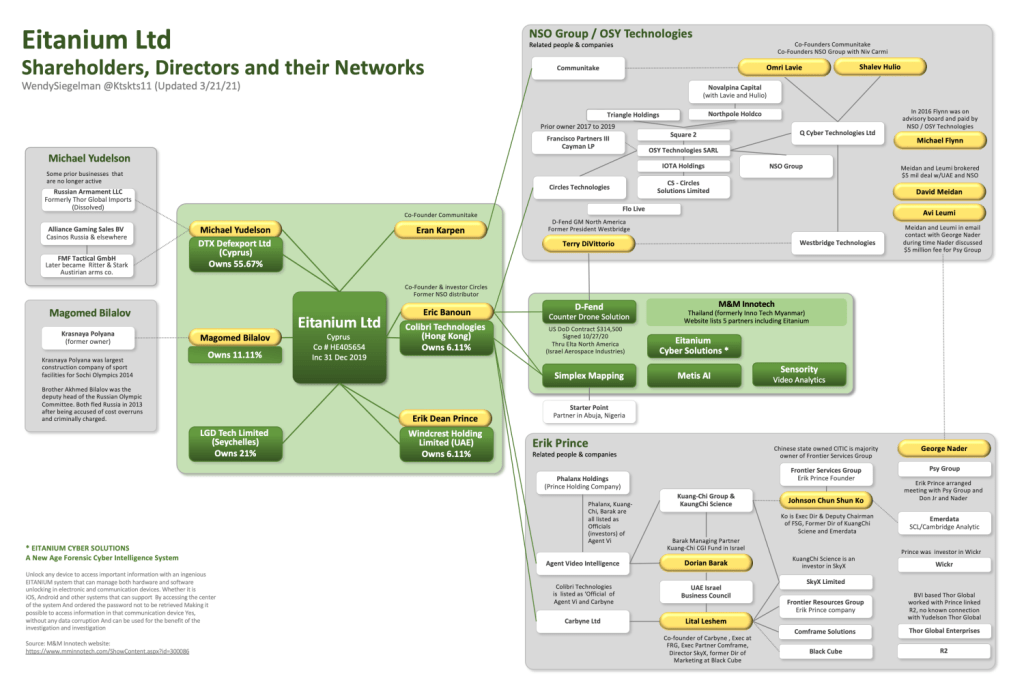
So…there is fairly proven established link between Erik Prince, and Michael Flynn. And Flynn, as we all remember, was the big win for David Bennett, the anti Moslem former chairman of the Oklahoma Republican party.
But wait! There’s more! I have at least one, maybe two more people to introduce you to. If you haven’t already made the connections, I promise if I live long enough and get my depression medication renewed, I will beat you over the head with my findings in a last post. But the chronic fatigue is for real, and your Tired Blogger is gonna go to bed (scandalously, it will be with Cassie).
Stay tuned in the next few days for more Tired Blogging!
We are still moved by old hatreds
Who Are the Good Guys?
Corporate Responsibility
Another catastrophe caused by corporate America, but of course it will be the little guy that suffers
What you didn’t know about Stalin’s Famines of the 1930s — History Matter
Another repost of the amazing History Matters blog. Check him out!
https://wordpress.com/read/feeds/135632491C

The primary cause of Stalin’s famine was his collectivization policy. Collectivization was designed to make agricultural production more efficient by having state-run farms manage the land.
What you didn’t know about Stalin’s Famines of the 1930s — History Matter
“All warfare is based on deception.” – Sun Tzu, The Art of War
I’ve been writing a great deal about Erik Prince, and I have been making veiled hints about tying him to local politics. One reason was to build the tension, the other was to buy time to do the research. I hope you are ready…nonlocals may not find this one as interesting as the local Okies will, but I hope it is, if not informative, at least entertaining. I’ve taken a long time on this one, let’s hope this was worth the time.
In this post, I intend to discuss the danger to our Republic in the form of privately held armies, as well as the history of mercenaries. I am hoping by Monday to share the cliffhanger I’ve been building up to. These are the posts I’ve shared on the subject so far.
https://wordpress.com/post/tiredmidnightblogger.com/5265
https://wordpress.com/post/tiredmidnightblogger.com/5308
https://wordpress.com/post/tiredmidnightblogger.com/5348
https://wordpress.com/post/tiredmidnightblogger.com/5390
Let’s dig in.

Private Armies, the Road to Feudalism
I believe that private armies are the road to a more dictatorial society. I believe one of the markers of the fall of Rome was when governors would start thinking their armies were their own, and not part of the military of Rome. As barbarians made more and more incursions, the societal structures collapsed, and finally the poor and landless found themselves selling their freedom to a lord who could support an army. We are a long way from there, but I think the seeds have begun to sprout. These are the articles I will use to analyze my case.
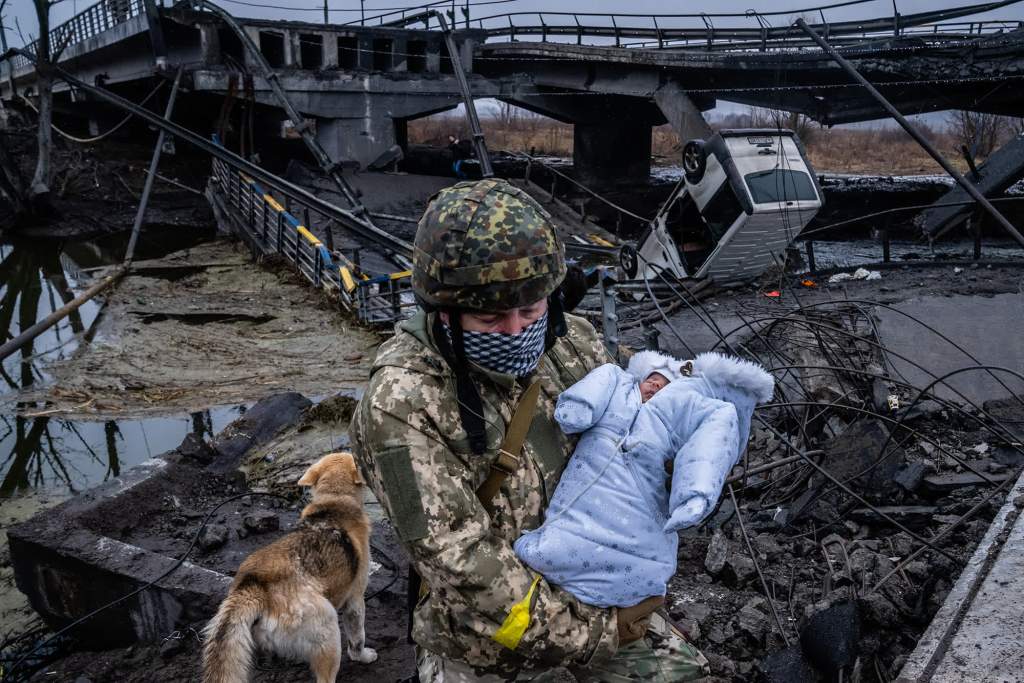
Sean McFate of the National Defense University Press, an ex-mercenary himself shares a frightening report (that I’ve never heard of before) where an American force of Green Beret’s and Marines, joined by Kurdish and Arabian forces, took 4 hours to painfully beat back a force of 500 Russian mercenaries armed with artillery, armored personnel carriers, and tanks. Had Putin declared war? No, these were “the Wagner Group, a private military company based in Russia, and like many high-end mercenaries today, they were covert and lethal.” Though they took merciless pounding from warplanes, “they did not waver.”
“Mercenaries are more powerful than experts realize, a grave oversight. Those who assume they are cheap imitations of national armed forces invite disaster because for-profit warriors are a wholly different genus and species of fighter. Private military companies such as the Wagner Group are more like heavily armed multinational corporations than the Marine Corps. Their employees are recruited from different countries, and profitability is everything. Patriotism is unimportant, and sometimes a liability. Unsurprisingly, mercenaries do not fight conventionally, and traditional war strategies used against them may backfire.”
The post goes on to report a frightening number of places where mercenaries are booming business. Some of this is honestly old news, some of it is new to me. The list includes, oil companies, Russia, the US, Yemen, Nigeria, Ukraine, Syria, and Iraq. “he capital of Kurdistan, Irbil, has become an unofficial marketplace of mercenary services, reminiscent of the Tatooine bar in the movie Star Wars—full of smugglers and guns for hire.” The United Arab Emirates has hired 1800 mercenaries from Latin America from drug cartels, Saudi Arabia hires many of theirs from Africa (I guess there is rain there). In Ukraine mercenaries fight for both sides hailing from Russian, Chechen, French, Spanish, Swedish, and Serbian backgrounds. “Nigeria secretly hired mercenaries to solve a big problem: Boko Haram. This Islamic terrorist group fights to carve out a caliphate in Nigeria, and the Nigerian army fights back, its methods no better.” Terrorists, including Al Qaeda, hire mercenaries.
“If terrorists can hire mercenaries, why not humanitarians? Nongovernmental organizations (NGOs) such as CARE, Save the Children, CARITAS, and World Vision are increasingly turning to the private sector to protect their people, property, and interests in conflict zones. Large military companies like Aegis Defense Services and Triple Canopy advertise their services to NGOs, and NGO trade associations like the European Interagency Security Forum and InterAction provide members with guidelines for hiring them. Some think the UN should augment its thinning peacekeeping missions with certified private military companies.3 The option of private peacekeepers versus none at all, which is the condition in many parts of the world today, is a Hobson’s choice. What’s to stop a millionaire from buying a humanitarian intervention in the future? Stopping atrocities would leave quite the legacy. Actress Mia Farrow considered hiring Blackwater to end the genocide in Darfur in 2008.” Thank God Mother Theresa hasn’t been mentioned.
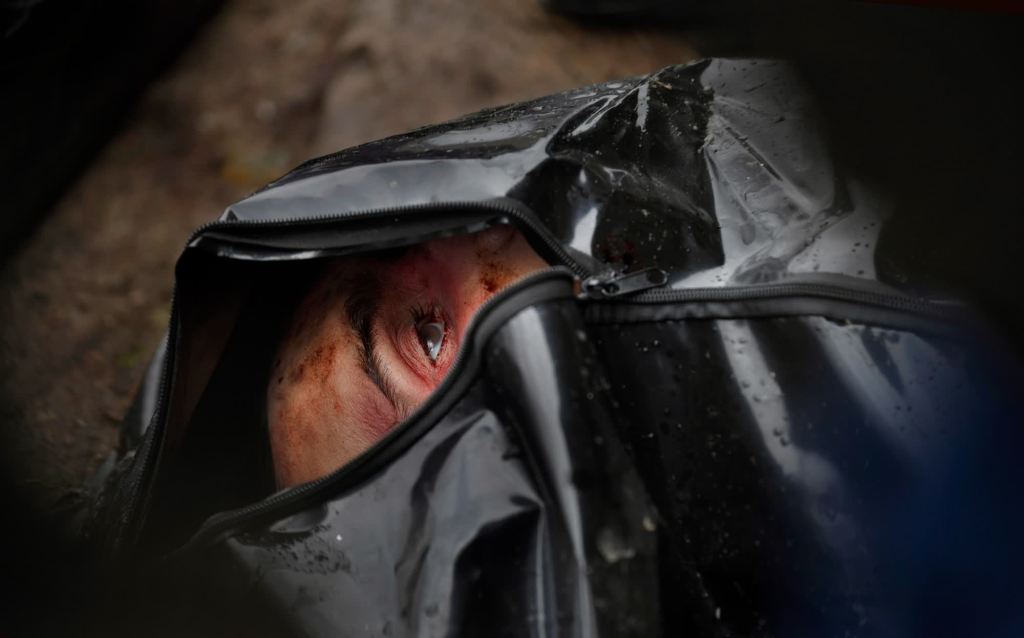
There are corporate mercenaries, pirate mercenaries, Erik Prince claims he used mercenaries to clean out the pirates of Somalia.
“There are even mercenaries in cyberspace, called hack back companies. These computer companies attack hackers, or “hack back” those who assail their client’s networks. Hack back companies cannot undo the damage of a network breach, but that is not the point. They serve as a deterrent. If hackers are choosing targets, and they know that one company has a hack-back company behind it and the other does not, they select the softer target. Also known as active defense, this practice is currently illegal in many countries, including the United States, but some are questioning this edict since the National Security Agency offers scant protection for nongovernmental entities. For example, the WannaCry ransomware attack in May 2017 infected more than 230,000 computers in over 150 countries. Victims included the United Kingdom’s National Health Service, Spain’s Telefónica, Germany’s Deutsche Bahn, and U.S. companies like Federal Express. If countries cannot protect their people and organizations from cyber attack, then why not allow them to protect themselves?”

Sean McFate continues: “The rise of mercenaries is producing a new kind of threat—private war—that threatens chaos. It is literally the marketization of war, where military force is bought and sold like any other commodity. It is an ancient form of armed conflict that modern militaries have forgotten how to fight. Should this trend develop, the super-rich could become superpowers, leading to wars without states. In such a world, states would be mere prizes.”
I wonder if Oklahoma is a prize.
A Brief History of Mercenaries
McFate then takes us back to the definitive work on leadership purged of morality, The Prince by Niccolò Machiavelli (1469–1527), “He despised mercenaries as “disunited, ambitious, without discipline, unfaithful; gallant among friends, vile among enemies; no fear of God, no faith with men.”8 This judgment has ossified into orthodoxy.
“Most think Machiavelli’s assessment of private force definitive, but it should not be. He hated mercenaries because they cheated him, owing to his own incompetence. From 1498 to 1506, he helped organized Florence’s defense and suffered serial humiliations at the hands of the city’s own mercenaries during the war against Pisa, a weaker adversary. In 1505, for example, 10 mercenary captains defected to the other side, a major embarrassment and strategic blow. The market for force is a “buyer beware” emporium, and those who do not know how to handle mercenaries, like Machiavelli, should not rent them.
“No longer trusting mercenaries, Machiavelli convinced the Florentine authorities to raise a militia instead, composed of citizen-soldiers whose loyalty to the republic would remain unflappable. But loyalty is a poor substitute for skill. These farmers-turned-soldiers were no match for professional troops, and the Florentines were soon crushed in 1512 by professionals. This military disaster resulted in the capitulation of the Florentine Republic, henceforward under papal control, and questions Machiavelli’s claims about the superiority of militias over mercenaries.”
Like McFate, I am fascinated by the history of mercenaries. He dives deeper into the history of the topic, and I can’t resist sharing some things that I hope to mix into a historical fiction novel. I already know all of this, but I can’t help but share.
“Mercenaries are everywhere in military history, starting with the Bible. The Old Testament mentions hired warriors several times, and never with reproach.10 Everyone used them. There was King Shulgi of Ur’s army (reigned 2029–1982 BCE); Xenophon had a huge army of Greek mercenaries, known as the Ten Thousand (401–399 BCE); and Carthage relied on mercenary armies in the Punic Wars against Rome (264–146 BCE), including Hannibal’s 60,000-strong army, which marched elephants over the Alps to attack Rome from the north. When Alexander the Great invaded Asia in 334 BCE, his army included 5,000 foreign mercenaries, and the Persian army he faced contained 10,000 Greeks. Rome used mercenaries throughout its 1,000-year reign, and Julius Caesar was saved at Alesia by mounted German mercenaries in his war against Vercingetorix in Gaul.
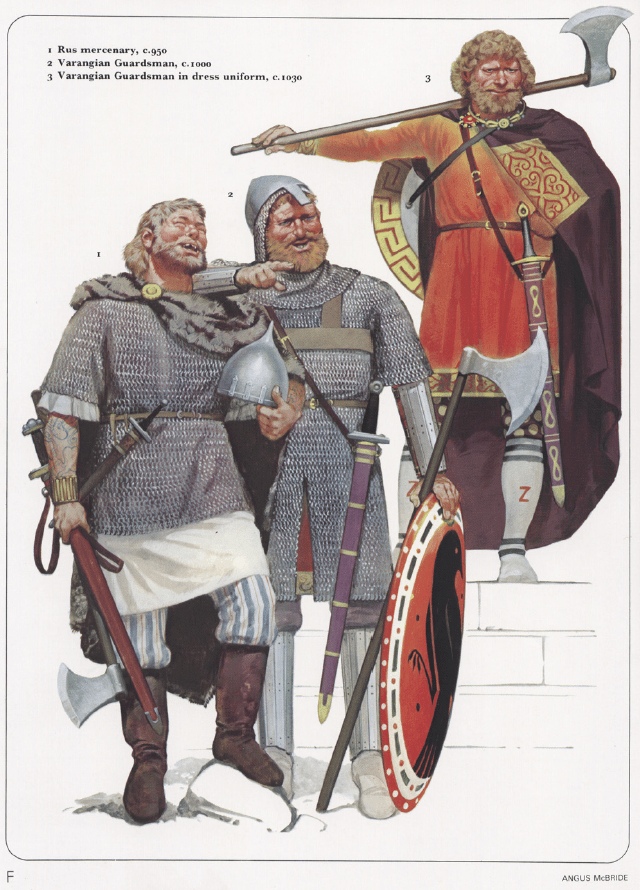
“The Middle Ages were a mercenary heyday. Nearly half of William the Conqueror’s army in the 11th century was made up of hired swords, as he could not afford a large standing army and there were not enough nobles and knights to accomplish the Norman conquest of England. King Henry II of England engaged mercenaries to suppress the great rebellion of 1171–1174, because their loyalty lay with their paymaster rather than with the ideals of the revolt. In Egypt and Syria, the Mamluk sultanate (1250–1517) was a regime of mercenary slaves who had been converted to Islam. From the late 10th to the early 15th centuries, Byzantine emperors surrounded themselves with Norse mercenaries, the Varangian Guard, who were known for their fierce loyalty.”
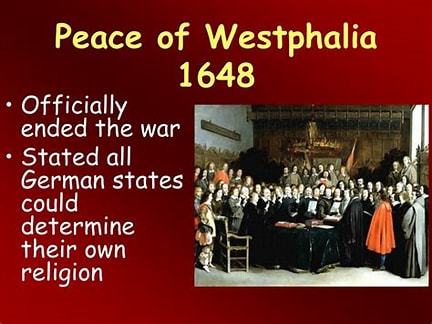
McFate discusses how the medieval dynamic came to an end.
“Things began to change in 1648. The Peace of Westphalia ended the Thirty Years’ War, one of the most destructive in European history and comparable to World Wars I and II for Central Europe. Nearly a third of the populations of modern Germany and the Czech Republic were wiped out, and it took the region a century to recover. Rogue mercenary units were to blame for much of it, and leaders of all sides tacitly agreed to put the free market for force out of business by monopolizing it. That is, public armies should replace private ones, costs be damned.”
“Over time, states monopolized the market for force with their national armies, and this created another opportunity: domination. Their old nonstate rivals were defenseless, without access to mercenaries or a standing army of their own. Old medieval powerhouses such as the church, city-states like Florence, and elite aristocratic families had no choice but kowtow to state rulers. Without mercenaries, nonstate actors had no way to challenge state ascendancy.
“The relationship between force, power, and world order is stark. Those who control the means of violence get to make the rules that others must follow or die. The consolidation of state power was gradual, spanning 2 centuries, and gave rise to a world order that should look familiar to readers. Sometimes called the “Westphalian Order,” it is a state-centric international system. It has many features, but the key one is this: Only nation-states are sovereign, and everyone else is subordinate. States guaranteed their supremacy through their national armies, since nonstate actors have no capacity to oppose them. In fact, the monopoly of force is the very definition of the modern state.13
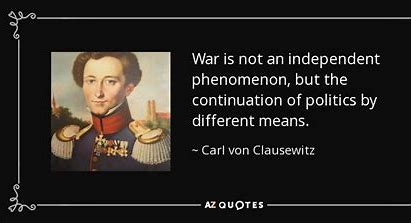
“Warfare soon became an exclusively state-on-state affair fought via national militaries, and this became “conventional war.” It is the only type of conflict Carl von Clausewitz knew, and it puts states at the center of everything. Only they get to wage war, make international law, and govern. The Westphalian Order spread across the globe through European colonization, and today we have internalized it as timeless and universal, even though it is less than 400 years old.”
McFate lays the cause of the modern return of the mercenary with the fall of the Berlin Wall. “As state power declines, private force rises. The relationship is causal. Without a global sheriff, mercenaries are free to roam the world again, in the light of day. The first public mercenary organization emerged in South Africa, ominously called Executive Outcomes, and fought across the continent. It put down rebel groups, took oil facilities and diamond mines, and trained client militaries for $40 million a year. During the Rwandan genocide in 1994, Executive Outcomes went to the UN and offered to stop the genocide for $120 million, a bargain in UN terms. However, Kofi Annan, then head of UN peacekeeping, refused, claiming “the world may not be ready to privatize peace” as 800,000 people were massacred.20 Executive Outcomes closed its doors in 1998, but left a strong alumnae network across Africa. It was involved in mercenary actions in Equatorial Guinea in 2005, Somalia in 2011, and Nigeria in 2015.
“Other mercenary firms got their start in the years after the Berlin Wall. A few include Sandline International, Blackwater, and Military Professional Resources Incorporated (MPRI). These were not lone mercenaries of the Cold War but organized ones, akin to the Free Companies of the Middle Ages. No longer in the shadows, they were multinational corporations, such as the medieval Free Companies, and some were even traded on Wall Street. Their reappearance signals the decline of the Westphalian Order and a slow return to the disorder of the age before.”
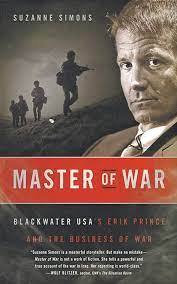
Ok, this article is just too fascinating, I have to stop quoting it or I’ll end up with 100,000 words and still not come to my point. If you are at all interested in the topic, this is a must read for anyone.
Politico shares the evaluation of an ex-mercenary on the merits of Prince’ plan to have a private army hand us victory in Afghanistan. Oh wow! It is Sean McFate again. “Prince’s argument has lots of problems. He insists contractors should not be stigmatized as “mercenaries,” even though he is proposing armed civilians in conflict zones—the classic definition of a mercenary. Instead, he says they are like the Flying Tigers, the popular name of the 1st American Volunteer Group that flew against the Japanese in 1941–42. Here is where his analogy takes a nosedive: The Flying Tigers were not mercenaries. Rather, they were U.S. military pilots who took off their uniforms to fly as civilians, so that FDR did not have to declare war. Once war was declared, they flew as American fighter pilots once again. That’s hardly the same thing as contractors being paid, often exorbitantly, to fight a war on our behalf.”
“Crazy as all this sounds, it is a marked improvement over Prince’s earlier op-ed for The Wall Street Journal, in which he advocates neocolonialism—a deeply un-American idea. He urged an American “viceroy” be installed to rule Afghanistan like a colonial overlord, backed by a mercenary army modeled on the old British East India Co. That’s like recommending plantations to assist African-Americans in poverty. Anger was swift. Hamid Karzai, Afghanistan’s ex-president, tweeted this: “I vehemently oppose the proposal to the U.S. govt to outsource its war in Afghanistan to private security firms.”
“Besides being offensive, Prince’s proposal is unworkable. I know because I’ve done these things. For years, I worked as a private military contractor in Africa and elsewhere. I built armies for clients, dealt with warlords, conducted strategic reconnaissance, worked with armed groups in the Sahara, transacted arms deals in Eastern Europe and even helped prevent a genocide in Central Africa…It’s worse than people think.”
He shares his personal experiences building an army in a third world country (talk about having something amazing on your resume). He ends this article thus:
“Prince is an amateur and makes rookie mistakes, which is probably why the generals laughed at him. Somehow, he believes 6,000 mercenaries and a small air force can solve Afghanistan’s problems. This is magical thinking: NATO could not succeed with 140,000 troops eight years ago, when the Taliban was in retreat. Now they run half the country. It is unclear what Prince’s 6,000 mercenaries will do now, other than create more Nisour incidents.
“When I raised an army in West Africa, under worse conditions, it took more than a handful of contractors at the battalion and company levels to create a professional, fully functioning military. A lot more. The U.S. Army War College asked me to write a monograph on how we did this, and—spoiler alert—it’s more complicated than Prince’s breezy plan. Then again, Prince has never raised a legitimate army.
“Where will these mercenaries come from? According to Prince, all will be “brave Americans” who are “former Special Operations veterans.” More sales talk. To keep costs down, he will probably have to outsource to the so-called Third World, where military labor is cheap. When I was in the industry, I worked alongside other ex-special forces and ex-paratroopers from places like the Philippines, Colombia and Uganda. We did the same missions, but they got Third World wages. Private warriors are just like T-shirts; they are cheaper in developing countries. Call it the globalization of private force.
“But do we want Filipino, Colombian and Ugandan mercenaries fighting our wars for us, their way? To them, military operations might involve massacring a village that could harbor terrorists. We might have to send in the U.S. Marines just to save the situation and America’s reputation, costing far more than the $40 billion Prince thinks he will save.
“Prince assures us that nothing will go wrong. To avoid Nisour incidents in the future, he wants to place all mercenaries under U.S. military law, known as the Uniform Code of Military Justice. However, this resolves little. Take, for example, jurisdiction: What happens if a Guatemalan mercenary massacres an Afghan family while on an American contract? Does he go to trial in: a) Afghanistan b) U.S. c) Guatemala d) nowhere? No one really knows, and a good labor lawyer could probably shred the case in minutes.
“Lastly, where has Prince been these past seven years? Why did he show up now? Like many mercenaries, he follows the money. After the Nisour Incident, he left Blackwater and helped raise a mercenary force for the United Arab Emirates. Now, he is working for the U.S.’s main geopolitical competitor, China.
“Prince smells an opportunity in Donald Trump. His sister is Betsy DeVos, Trump’s secretary of education, giving him access to the White House. Prince is looking for a billion-dollar paycheck while wrapping himself in the American flag. No one should fall for his con.”
In my next post, I intend to go into more detail about why Eric is of interest to Oklahoma. Till then, don’t join the Mob.
 Tired Midnight Blogger (What Blogs at Midnight)