Ranting about how messed up the world is, espcially Oklahoma.
Author Archives: Curtiswselby
They say not to write a blog from a tired space, but I suffer from chronic fatigue syndrome, so frankly, everything I do is from a tired space. Likely I'm not doing the greatest job of search engine optimization. But I know there are others like me. Passionate about life.
Regus Filbin was the original host of the gameshow Who Wants to Be a Millionaire? Both the show and your Tired Blogger (what blogs at midnight) have seen ups, downs, new faces and cancellations. But the show had vast appeal because so many people do want to be millionaires. But so few (me included) don’t know how.
Some of you may remember I rambled quite a bit around New Year’s about the goals and dreams I have for myself and this blog. I’ll leave a link to one of the posts, to remind anyone who cares which books I had thought about reviewing.
I tried to set up poll, but I don’t know if it just didn’t take, or if nobody was interested. I’m going to go off the “wild card” list in that post and do some random thoughts on the first 100 pages of The One Minute Millionaire, cowritten by Mark Victor Hansen of Chicken Soup for the Soul fame, and Robert G. Allen, famous for writing books about wealth building in real estate.
Has chronic fatigue finally driven your Tired Blogger crazy? Read on and find out!
I’ve read it before. “Why aren’t you a millionaire”? Good question. Not gonna make any excuses here, but I will say this…unless a millionaire is asking me that question, I frankly don’t wanna hear it. My best friends know the story behind my journey with this book, and will understand when I quote, “shut up and read the book.”
I’m going to discuss three things about the beginning of the book:
1) What’s up with that title?
2) What’s up with all those affirmations? Do they really work or am I just wasting my time?
3) The “enlightened” millionaire, an idea whose time has come, or have Hansen and Allen started smoking the good stuff? (And will they share)?
Let’s begin.
I think (though I could be wrong) this bestselling book influenced Hansen and Allen’s choice of titles. I’ve read it. Not terrible, but likely won’t read it again. Please share in the comments if you have read it and wanna share insights.
I Don’t Know About Anyone Else, But I REALLY Don’t Wanna Be Referred to as a “One Minute Man”…
Anyone else ever heard of “Poe’s Canon”? Of course not! There is no such thing! But Poe did have a rule that I’ve always held to in my efforts. And I can’t find it under any other name, so I am declaring it “Poe’s Canon”! Huzzah hurrah! Hip hip hurrah!
Enotes.com explains it as succinctly as anyone else. “Edgar Allan Poe ‘s belief that it is critical that the first sentence of a story should cause the reader to experience the effect for which the author strives is very well exemplified in his writing.”
This random fellow we polled on the streets of Tulsa says that Poe was very influential to his success. I think he said his name was Dwight Manfred…and he said something about having been in the military till recently. Judging by his high dollar outfit I figured he was in big oil. He laughed and said he was more in deep sh-t.
The beginning of is so important. Just like how men and women decide within a minute whether they will date someone or not, the average reader is not going to wade through 14 pages of dialectic dissertation about how Keynesian economics is naturally an outgrowth of chaos theory to get to the punch line about the butterfly. But a ten-year-old boy who loves science fiction sits down to a short story entitled A Sound of Thunder, and reads the first sentence “The sign on the wall seemed to quaver under a film of sliding warm water, Eckels felt his eyelids blink over his stare, and the sign burned in this momentary darkness: TIME SAFARI, INC. SAFARIS TO ANY YEAR IN THE PAST. YOU NAME THE ANIMAL. WE TAKE YOU THERE. YOU SHOOT IT.” The boy has no idea what chaos theory is (I doubt Bradbury did at the time he wrote the story), but he learns more about chaos theory in that one sitting than he will learn later from chapter after chapter of the textbook.
My point is, I hate the title. I would never have read it but for extenuating circumstances that influenced me to overcome my distaste for the title.
Those who know the story about the book will know why this is here.
Possibly I am wrong, but the effort to become a millionaire looks to me like a herculean effort. Unless you inherited it or won it in a lottery, a minute will not earn you a million dollars. So why did they choose this title?
In their introduction they declare that someone in the world becomes a millionaire every sixty seconds. The point isn’t that it only takes you a minute to earn it, but that you can be one of those millionaires. (Yeah, kinda like that click bate that told you how to get any woman to fall in love with you). Then they state that “it only takes a MINUTE to decide” to be a millionaire. And then they state that the “million-dollar idea” (those who have been reading my blog will hopefully remember that concept). Basically, there are all kinds of reasons they chose that title, and to them (and possibly to many of my readers) it seems like a brilliant idea.
Personally, I would have entitled it You Too Can Earn Big Bux (and how to do so Without Being a Jerk. But it is hard to criticize a title that has sold 15 million copies, according to Wikipedia. My opinion may or may not be valid, but it is a fact that that title that I don’t like has sold phenomenally well, whereas I have yet to publish a single book, and have earned less than $300 as a writer thus far. So, take my opinion with a whole lotta salt.
I was looking for something else, but when I saw this, I just HAD to share…
What’s up with all those affirmations? Do they really work or am I just wasting my time?
The book’s biggest principle is that you have to have confidence and a positive mental attitude. I’ll believe the need for confidence, but that the rich are super positive…? That isn’t my experience. When I was young on the farm, yeah, the richer farmers often were the most positive, but to me it begs the question of which caused which. And since I’ve left the farm, my experience has been that the higher up the chain of command you go at Wal-Mart, at Pepsi, basically nearly every company (except Paragon) that I worked for from 1997, till this current company, the higher the odds they were a–holes.
But maybe you don’t just want my admittedly limited experience. Is there any science on the subject? Let’s look at two articles that I think are helpful whether you like affirmations or think they are stupid.
Just not my female voters who didn’t ask me to touch their boobs….
Long and the short, affirmations work for those who already have strong confidence and high self-esteem. While they can still be helpful to those of us who have experienced abuse, many of us not only don’t find them helpful, but we also feel at first that they are a sad, sick mockery. You do you, but from my experience and reading, you first have to get yourself to a certain point of healthy and honest positivity before they become useful. Don’t get discouraged (I know…too late) if you have low self-esteem and try them and they fail. If you have the strength to do so, back off them, and start diving into positivity psychology, and then, if you feel the need to, do the affirmations. I intend to keep doing them for a while mainly just to I can report back.
I will say, I’ve been doing them pretty consistently all month, and they do seem to be helpful for the first time in my life. Maybe I’m finally getting to the point where they are useful. Here are some quotes from the articles you may find useful if you don’t want to read the whole thing.
This is the foundational book, along with his other book Authentic Happiness, of the positive psychology movement.
Healthline.com gives some information about how affirmations work (when they do).
“Neuroplasticity, or your brain’s ability to change and adapt to different circumstances throughout your life, offers a clue to help understand not only what makes affirmations work, but how to make them more effective.
“Your brain sometimes gets a little mixed up on the difference between reality and imagination, which can be surprisingly useful.
“Creating a mental image of yourself doing something — like acing a nerve-wracking interview or conquering your fear of heights by bungee jumping — activates many of the same brain areas that actually experiencing these situations would.”
Positivepsychology.com gives a thorough explanation of Martin Seligman’s work. What I love about this man is that he is the person credited with discovering learned helplessness. I used to try to explain this to bosses at work until I realized that this was actually what they WANT. “Learned optimism is very much a positive psychology concept; it’s the opposite of learned helplessness: a phenomenon whereby individuals believe they are incapable of changing their circumstances after repeatedly experiencing a stressful event (Abramson, Seligman, & Teasdale, 1978; Seligman & Garber, 1980; Maier & Seligman, 2016).”
Seligman felt at that point that psychology is too focused on the negative. His idea was that maybe if we help normal people improve their lot rather than wait till life has crushed them and we have to repair them or support them in their despondency, he started studying the who, what, when, where, why, and to what extent of positivity.
“Three cognitive distortions tend to underpin the way we understand our experiences: personalization, pervasiveness, and permanence. By tackling these distortions, we can learn to be more optimistic.
“Personalization can be thought of as an internal vs. external attribution style. If something bad happens, a pessimist will attribute it to internal factors. They’ll see that failure or setback as something that’s their fault, personalizing the outcome. Optimists externalize instead; they aren’t to blame, and next time may be better.
“Pervasiveness describes the global or specific element of adversity or a negative event. A global or pervasive attribution is pessimistic and closely related to catastrophizing. “I did a terrible job; I’ll never be hired again – EVER.” Someone who views an undesirable outcome as pervasive will also be more inclined to believe that it will impact other aspects of their lives, too. “It means I’m a bad student, too, and unlovable (again).” Optimists see positive events as pervasive, it can be argued, rather than negative ones.
“Permanence is about whether we view a negative situation as fleeting or lasting and unchangeable. A pessimistic explanatory style sounds something like: “I’ll always be a terrible dancer. It’s just who I am.” A positive one sounds more like: “I probably didn’t dance so well because my leg is currently hurting, but I’ll be back on top soon.” The key takeaway here is that the situation or circumstances are not fixed or unchangeable.”
The “enlightened” millionaire, an idea whose time has come, or have Hansen and Allen started smoking the good stuff? (And will they share)?
That’s what I’m talking about.
I don’t want to get too far into the ethics of wealth. Either it is possible to become wealthy and yet be ethical, or it is not. I’ve known people of moderate wealth, even full-fledged millionaires, who I believed were great people. But I have no experience with a billionaire, at that level of wealth my knowledge is limited to what I read.
But again, what do the experts say? I could only find one effort to be scientific about this, and those studies are pretty damning.
ABC News reports that the rich were found to be more likely to violate traffic rules and various other measures of ethical behavior are strained by the rich. The scientist behind the study shares that on top of the actual science, there is ample anecdotal evidence sent to him.
“There is this mental frame of mind when you feel like you are at the top,” Keltner said. “You think you are above the law, you think you can get away with stuff and you won’t have to deal with the consequences.
“Police officers have told me that drivers of fancy cars often lecture them when they pull them over for a ticket,” he said. “And construction guys tell me often that if they work at a really wealthy home, it’s hard to get paid, which is absurd.”
So this guy is less likely to be ethical than the rest of us.
Forbes doesn’t exactly paint the rich as great people, but I think they give the best defense out there that I’m actually willing to listen to.
“If you were able to answer each of the questions for a justification you identify with in a positive way, then you’re moving in the right direction to become a self-made millionaire. However, this is not always the case.
“Simply put, becoming wealthy is NOT an entitlement. It’s not a privilege nor is it a right. If you’re healthy and motivated, however, the advantage you have is that you very likely have the opportunity to pursue wealth, or happiness for that matter. It’s taking advantage of this opportunity by actively, forcefully, and smartly pursuing wealth that can potentially become rich.
“Since you don’t deserve to be rich, and presumably you want to be rich, what are you going to do about it?”
What do you readers think? Do you think pursuing wealth is a good use of my time, or would we all be better off just becoming monks and meditating our lives away? Comments wanted. Let me know if you are enjoying learning about this book, or should I move on to something else?
I brouse online sometimes, and today, seeking a fun topic, I asked Bing if fantasy has seen a resurgence. At least according to the sites that come up highest in the search engine, the last decade has in fact seen a strong increase in fantasy on streaming platforms like Netflix, as well as in comic books.
Sounds like fun to me. I’m going to discuss my childhood love of fantasy, I’m going to talk about why there has been a resurgence, and then I’ll discuss the good or evil of fantasy. Strap in, this may be a bumpy ride.
Curtis, Get Your Head Out of the Clouds
I’m afraid I was a very fanciful boy. My teachers (who were kind and believed intelligence was a gift) said I was “imaginative” and “creative.” My family (other than my sister and one or two of my uncles) said I was weird, that all that reading would warp me. “Weird books make weird kids, and nobody wants to be weird.”
I can hear the debate now. “Science fiction is different than fantasy!” Which I totally agree with, but only because I am a fellow geek. Like how a woman has names for colors men can’t see, you have to be able to appreciate something in order to understand the gradations.
I loved cartoons way too much. I copied the lisp of some cartoon characters (I was told it was cute), till when I was six, I was put in special education classes and learned to be ashamed of it. Since then, I’ve tried to speak more or less like a normal(ish) human being. One of my earlier memories was going to the first Star Wars‘ initial release. It was amazing, but my attention span wasn’t really good enough for it. I did better with the comic books.
But my love was really a shallow thing. Story meant little to me till I was introduced to The Chronicles of Narnia. Before that I mostly just loved exciting fight scenes, the “zap” of a laser or blaster, the clash of a sword. I wanted perfect heroes, like Superman was back then. No flaws, utterly capable, always winning, rarely ever being out fought or out thought by the bad guy. C. S. Lewis introduced me to the love of story, as well as some Bible stories. Then I read Tolkien and Lloyd Alexander, and I believe that was when I first began to honestly “grow up.” I learned the good guys don’t always win. Sometimes the good guys even die. Worse than anything, sometimes the good guys become evil. If Gwydion could be betrayed by one of his men, if Boromir could slip for a moment beneath the sway of the one ring, if Susan at the end of Chronicles of Narnia could end up “left behind,” what did that mean for me?
Ah….the Satanic Panic. It took me so long to outgrow this. Hey Brook! How come Ashton is an Eighth Level gunslinger yet I the player can’t hit the broadside of a barn from eight feet away? Because there is a difference between fantasy and reality? Ohhhhhh…
The Satanic Panic kept me from D&D till I was 19, but it took a while for me to begin to fear fantasy itself. In my mind and heart, I made a distinction between Lewis, Tolkien, and Alexander, and the other stuff that was “evil.” But then I heard a sermon or two on the evils of rock & roll, and a sermon about these verses: “Proverbs 28:19 The one who works his land will have plenty of food, but whoever chases fantasies will have his fill of poverty. Those who work their land will have abundant food, but those who chase fantasies will have their fill of poverty.” “I Timothy 4:7 Have nothing to do with irreverent, silly myths. Rather train yourself for godliness.” And magic, the source of so much of fantasy, was unequivocally condemned by the Bible. I had loved wizards like Gandalf and Ged from Earthsea, I had started writing my own fantasy stories, starring an analog of myself as a mysterious doomed mage, and suddenly the church was telling me I was evil. For a long time, I felt like the love I had naturally felt for fantasy must be a flaw. I quit writing (it was a waste of paper) and became as coldly logical as I was able. I was preparing myself, I thought, for the harsh realities of reality. I was going to become like Spock.
I failed.
My senior year of high school was when I was most confused. I started to think that fantasy was a huge flaw in my mind. That imagination was evil. “We must bring every thought into captivity.” I couldn’t do it. I could only NOT love swords and sorcery by dying inside. Of course, the Bible is clear that we are to be “dead unto sin.”
I’m not trying to write a discourse on my psychology, or my journey in life. Still less am I attempting to convince you to believe or disbelieve the scriptures I quote. The topic is fantasy itself. I’ll return to this trial by fire later. Suffice it to say, like all other fashions, fantasy has swings. One year it is popular, and the media touts its return. Then some years later it is scorned, and all that is wanted is “realism,” and “escapists” are looked down on with Puritanical frowns. And in my own life, I have had mood swings. But it seems when I am healthiest is when I most love fantasy. When I am most angry or most dead inside is when I don’t want it at all. Or food. Or sex. Or sleep. Or anything.
The Resurgence of Fantasy
The current resurgence of fantasy, depending on who you talk to, can be traced to the popularity of Game of Thrones, and Stranger Things, and Big Bang Theory.
I just had to steal this one. According to theguardian.com “Gamers paid $4,000 for four days’ D&D at Langley Castle in Northumberland. Photograph: Leo Kei Angelos.” Brook…Jason…Stacy…Jeremy…Glen…Paul…pack your bags and your dice, we’re going to Stonehenge.
.
Celebrities have been coming out as D&D players almost as fast as they come out of the closet for being gay. The list goes on and on like Speed Racer. Stephen Colbert, Dwayne “the Rock” Johnson, Vin Diesel, Will Wheaton, Drew Barrymore, Matthew Lillard, and intellectual Ta-Nehisi Coates are just a partial list.
And the various podcasts and web series have promoted several games told as stories, like Critical Role, The Glass Cannon, and Oklahoma’s own Red Dirt D&D, allow us to enjoy a story crafted as much by chance rolls of the dice as by a DM.
Truly we live in heady times.
The Glass Cannon is a podcast where a Pathfinder game is recorded. I’ve taken some inspiration from one of the characters for my favorite character in a Pathfinder game that my friends and I play. I play a gunslinger, Ashton Books. He is a dwarf, as tough and wise as they come, but very gruff and unlikeable.
Is Fantasy Good or Evil?
My predilection is to announce that fantasy is good. Unequivocally good. But then, doesn’t an alcoholic believe his booze is good? Doesn’t a meth head believe his drug is good? Is there a difference between fantasy and drugs? And if so, what is that difference? Is this my real life, or is this just fantasy?
I don’t mean to do anyone’s thinking for them…but if you ever read this tract, and then observe a few games, you may end up asking yourself who has the better grasp on reality?
The Christian Church, for all the stories about miracles, angels, and demons, seems very interested in keeping our minds well-grounded in the real world. Don’t rebel against the lord, accept your fate with patience. Don’t read poetry and go to plays. Go back to the field and get your work done. Don’t look at that beautiful woman over there, go home to your angry, homely wife and endure her wrath with patience till morning, when you must get up early, read your Bible, pray to God for blessings you neither deserve, nor are allowed to want, and then go back to work for a lord who is likely raping your daughter, stealing your money, and sending your son off to an unjust war. But you are the one who will burn in hell if you even think an evil thought toward them. Maybe I paint the picture too simplistically. And frankly, you do have to stop reading and start doing chores at some point. The world really will go to hell if nobody is cleaning the toilets or working the fields.
At the risk of offending some of my Christian readers, I am not a fundamentalist. I think the fall of man is not something that literally happened, but a story of the early Hebrews to attempt to understand why there is suffering in the world. It has poetic truth, it may have theological truth, but I don’t believe it has historical truth.
Ok, enough about what I think. Let’s share some wiser folk’s thoughts. Desiringgod.org has this to say: “The garden of Eden was in every way a garden of real delights. Adam and Eve enjoyed the unfiltered fullness of the presence and fellowship of…God, whose radiant glory emanated from every wonderful thing he had made and given to them. And then the satanic serpent showed up and presented them with a fantasy where the ecstatic good was cast as flat and boring, and evil was cast as attractive and intriguing. Our progenitors allowed themselves to be tragically charmed, and they believed the lying fantasy. When they did, their garden of joy — and ours — became a dreary wasteland of monotonous misery.
“And since that time, every fantasy that has put a charming, attractive face on evil and deceived a human being has replayed that tragedy. The fantasy markets itself as a garden of delight when it really is a desert. And it robs us of the beautiful good, alienates us from God, and leaves us desolate.
“We must come to terms with this truth. Evil fantasies are perversions of the real good — the good we are designed to really enjoy. In creating them, we use our God-like imaginations in a satanic way, fantasizing a world in which we rule as God and indulge our selfish ambition, greed, anger, hatred, violence, covetousness, sexual lusts, and indolence…They accustom our spiritual taste buds to fictional evil and addict us to the drug of titillation till we lose the taste for good and end up with nothing real.”
What do you think? Is this a comforting thought, or a frightening one? Is it more like Budha’s idea of meditation, or more like Orwell’s war against thought crime? Comments wanted.
Essentially, our thoughts are prone to be evil, according to…well…lots of different beliefs. And if we just allow our thoughts to run wild, we will end up being serial killers, male chauvinist pigs, or worse, Democrats.
I don’t mean to mock anyone here. I am mainly just lashing out in the bitterness of my own heart. Because on one hand, yes, I do think we have to fill our minds with positive and healthy thoughts, but I also think this can go too far sometimes. If I have to castigate myself for every “bad” thought I have…isn’t that itself a wicked thought?
Can’t I just love Jesus in peace?
What does psychology say about fantasies? Psychologytoday.com says: “Indulging in fantasies may seem like a waste of time, but they are far from frivolous. Most fantasies serve a specific purpose: They can be entertaining, distracting, frightening, or, in the case of sexual fantasies, arousing. Fantasizing about specific goals can foster creativity, help someone better understand their wants and needs, and even enable them to plan for the future.
“When people attempt to turn their fantasies (especially their sexual fantasies) into reality, it’s critical that everyone involved consent to the activity. Other than that, however, most fantasies remain just that—fantasies. Left unspoken, they cannot harm others just by existing in someone’s mind.”
Whatever you may think of fantasy, we all have dreams. And whether we can control our fantasies or not, we have virtually no control over our dreams, unless we are lucky enough to be lucid dreamers. What is the connection between dreams and fantasy? Comments wanted.
Psychology Today doesn’t tell us what the purpose of fantasies are. Honestly, I wonder if anybody knows. But there is a strong correlation between daydreaming and the ability to solve problems. So, while fantasies can be dangerous, they are also an essential part of being human.
One of my heroes, J.R.R. Tolkien, wrote a very insightful essay on the efficacy of fantasy. It is entitled “On Fairy Stories,” and I recommend it to anyone who wishes to understand this topic.
“The realm of fairy-story is wide and deep and high and filled with many things: all manner of beasts and birds are found there; shoreless seas and stars uncounted; beauty that is an enchantment, and an ever-present peril; both joy and sorrow as sharp as swords. In that realm a man may, perhaps, count himself fortunate to have wandered, but its very richness and strangeness tie the tongue of a traveller who would report them. And while he is there it is dangerous for him to ask too many questions, lest the gates should be shut and the keys be lost. There are, however, some questions that one who is to speak about fairy-stories must expect to answer, or attempt to answer, whatever the folk of Faërie may think of his impertinence. For instance: What are fairy-stories? What is their origin? What is the use of them? I will try to give answers to these questions, or such hints of answers to them as I have gleaned— primarily from the stories themselves, the few of all their multitude that I know.”
According to Tolkien Fairy stories are “said to be (a) a tale about fairies, or generally a fairy legend; with developed senses, (b) an unreal or incredible story, and (c) a falsehood. The last two senses would obviously make my topic hopelessly vast. But the first sense is too narrow. Not too narrow for an essay; it is wide enough for many books, but too narrow to cover actual usage. Especially so, if we accept the lexicographer’s definition of fairies: “supernatural beings of diminutive size, in popular belief supposed to possess magical powers and to have great influence for good or evil over the affairs of man.” Supernatural is a dangerous and difficult word in any of its senses, looser or stricter. But to fairies it can hardly be applied, unless super is taken merely as a superlative prefix. For it is man who is, in contrast to fairies, supernatural (and often of diminutive stature); whereas they are natural, far more natural than he. Such is their doom. The road to fairyland is not the road to Heaven; nor even to Hell, I believe, though some have held that it may lead thither indirectly by the Devil’s tithe.”
The fairy that leads us to hell is merely a demon, does that mean a fairy that leads us to heaven is an angel?
As for the origin of such stories, Tolkien tells us that “I shall therefore pass lightly over the question of origins. I am too unlearned to deal with it in any other way; but it is the least important of the three questions for my purpose, and a few remarks will suffice. It is plain enough that fairy-stories (in wider or in narrower sense) are very ancient indeed. Related things appear in very early records; and they are found universally, wherever there is language. We are therefore obviously confronted with a variant of the problem that the archaeologist encounters, or the comparative philologist: with the debate between independent evolution (or rather invention) of the similar; inheritance from a common ancestry; and diffusion at various times from one or more centres. Most debates depend on an attempt (by one or both sides) at over-simplification; and I do not suppose that this debate is an exception. The history of fairy-stories is probably more complex than the physical history of the human race, and as complex as the history of human language. All three things: independent invention, inheritance, and diffusion, have evidently played their part in producing the intricate web of Story. It is now beyond all skill but that of the elves to unravel it. Of these three invention is the most important and fundamental, and so (not surprisingly) also the most mysterious. To an inventor, that is to a storymaker, the other two must in the end lead back. Diffusion (borrowing in space) whether of an artefact or a story, only refers the problem of origin elsewhere. At the centre of the supposed diffusion there is a place where once an inventor lived. Similarly with inheritance (borrowing in time): in this way we arrive at last only at an ancestral inventor. While if we believe that sometimes there occurred the independent striking out of similar ideas and themes or devices, we simply multiply the ancestral inventor but do not in that way the more clearly understand his gift.”
Story is itself a kind of fantasy. Fantasy is often little more than our efforts to make sense of a complicated world. Tolkien continues to explain the “use” of fantasy.
“I will now turn to children, and so come to the last and most important of the three questions: what, if any, are the values and functions of fairy-stories now? It is usually assumed that children are the natural or the specially appropriate audience for fairy-stories. In describing a fairy-story which they think adults might possibly read for their own entertainment, reviewers frequently indulge in such waggeries as: “this book is for children from the ages of six to sixty.” But I have never yet seen the puff of a new motor-model that began thus: “this toy will amuse infants from seventeen to seventy”; though that to my mind would be much more appropriate. Is there any essential connexion between children and fairy-stories? Is there any call for comment, if an adult reads them for himself? Reads them as tales, that is, not studies them as curios. Adults are allowed to collect and study anything, even old theatre programmes or paper bags. Among those who still have enough wisdom not to think fairy-stories pernicious, the common opinion seems to be that there is a natural connexion between the minds of children and fairy-stories, of the same order as the connexion between children’s bodies and milk. I think this is an error; at best an error of false sentiment, and one that is therefore most often made by those who, for whatever private reason (such as childlessness), tend to think of children as a special kind of creature, almost a different race, rather than as normal, if immature, members of a particular family, and of the human family at large. Actually, the association of children and fairy-stories is an accident of our domestic history.”
He goes on to explain that many of these stories were not originally for children. Many in fact were very much NOT child friendly. We have been coming back to this understanding in the last decades.
Even Disney is coming around to understanding. Fantasy, like Trix, is no longer just for kids.
Tolkien goes on to explain that Fantasy provides us with an escape from the harshness of real life, and a consolation for the drabness that surrounds us.
“I will now conclude by considering Escape and Consolation, which are naturally closely connected. Though fairy-stories are of course by no means the only medium of Escape, they are today one of the most obvious and (to some) outrageous forms of “escapist” literature; and it is thus reasonable to attach to a consideration of them some considerations of this term “escape” in criticism generally. I have claimed that Escape is one of the main functions of fairy-stories, and since I do not disapprove of them, it is plain that I do not accept the tone of scorn or pity with which “Escape” is now so often used: a tone for which the uses of the word outside literary criticism give no warrant at all. In what the misusers are fond of calling Real Life, Escape is evidently as a rule very practical, and may even be heroic. In real life it is difficult to blame it, unless it fails; in criticism it would seem to be the worse the better it succeeds. Evidently we are faced by a misuse of words, and also by a confusion of thought. Why should a man be scorned if, finding himself in prison, he tries to get out and go home? Or if, when he cannot do so, he thinks and talks about other topics than jailers and prison-walls? The world outside has not become less real because the prisoner cannot see it. In using escape in this way the critics have chosen the wrong word, and, what is more, they are confusing, not always by sincere error, the Escape of the Prisoner with the Flight of the Deserter. Just so a Party-spokesman might have labelled departure from the misery of the Führer’s or any other Reich and even criticism of it as treachery. In the same way these critics, to make confusion worse, and so to bring into contempt their opponents, stick their label of scorn not only on to Desertion, but on to real Escape, and what are often its companions, Disgust, Anger, Condemnation, and Revolt. Not only do they confound the escape of the prisoner with the flight of the deserter; but they would seem to prefer the acquiescence of the “quisling” to the resistance of the patriot. To such thinking you have only to say “the land you loved is doomed” to excuse any treachery, indeed to glorify it.”
I feel I have no skill to add to Tolkien’s words. This is what persuaded me that there is no harm in fantasy itself. The harm is in staying there too long. In choosing to harm others by neglect rather than shut the book and do the chores. But the person nagging you to shut the book is, I think, at least as guilty, and in the end, only God could really tell us who is right or who is wrong.
If you love fantasy, just please be sure that there are at least a few people in your life who are more important to you than your fantasies. If you don’t love fantasy, please be sure that your condemnations of fantasy enthusiasts are more about the good of that person, and less about your inability to understand their tastes.
I hope you enjoyed. Please comment and let me know what you would like to read next. Till then, make mine Marvel!
If not for people with the gift of imagination, I would have abandoned Christianity long ago. Is it a dangerous gift if made an idol? Likely. But if an infinite and all caring God cannot handle my random fantastic thoughts and still love me, then that God is not worth my worship. Both Christian and Heathen should listen to their peril.
A dragon dance group performs in Manila’s Chinatown during Chinese Lunar New Year, in Manila, Philippines, January 22, 2023. REUTERS/Lisa Marie David
Last year I wrote a piece about the Chinese/Lunar New Year. It was a fairly confusing piece, since I started writing it thinking that it was the Year of the Dragon, but it was actually the Year of the Tiger. I didn’t have as good a grasp on editing then (I could still use some pointers), so the title is Lunar New Year of the Dragon. I’ll leave the post here: https://wordpress.com/post/tiredmidnightblogger.com/453
I wasn’t very inspired that day. I didn’t really know what I wanted to write about, so I looked up on Google Trends, and that was one of the highest trending things. I talked about having been born in the year of the pig, and about how the people born in that year are supposed to be so reliable, but we don’t want to follow pigs, we want to follow tigers. Here is a random quote:
“People born during the year of the Pig are honest, genuine, and sincere. They have a “heart of gold” and are “most admired.” They are called upon when advice is needed and are always willing to give a helping hand. Sounds pretty good, I hope I’m a little bit like that. But I can see why nobody would follow such a person. “Seek his advice, but don’t follow it. He is honest…what a dummy!”
“Evidently the whole wallowing in mud thing isn’t in the cards. I was hoping I at least had one redeeming quality.”
I loved this image. I don’t know which would be more terrifying, to fight a tiger, or to fight this boar.
China is a powerhouse, but they have some struggles of their own. The movement that I find most fascinating (and heartbreaking) is the “China is a powerhouse, but they have some struggles of their own. The movement that I find most fascinating (and heartbreaking) is the “Bailan” movement among the youth.
Let’s acknowledge the year of the Rabbit by digging into Bailan. I’m going to explain what it is, some of the causes behind it, and discuss the Chinese government’s reaction to the Bailan movement.
Bailan (摆烂), the Let it Rot Movement.
I couldn’t let the post go too long without an image of the love birds. Cheers to the Year of the Rabit.
China has a long history of cultural and scientific advancement, and since the most ancient times, China has held at least 10 percent of the world’s population. With all the advancement came a larger population, and that trend continued up till 1850, when the estimated population of China as a percentage of the world’s population was roughly 33%. The West was terrified of China. Fearing they would overwhelm the world with sheer numbers, colonial powers embarked on policies intended to curb their power, and while the Chinese population kept growing, their cultural influence declined sharply after the spread of opium and the Boxer Rebellion.
But it was important to Chinese people to have as many children as possible so that there would be a large number of producing young folks to take care of the elderly. The burden of care was lighter if there were more people to spread the labor around.
This became unsustainable.
For the first time in modern history, if not for the first time ever, the population of China is in a decline.
This should be a great victory for Communist China, as this has been one of the major aims of the People’s Revolution for a long time, frankly, for as long as this Tired Blogger can remember. I’ve heard many predictions in my time about how things would end up. War with Russia, war with the US, a warrior society of men who waged war simply to obtain women. Thus far, none of this has panned out. What has happened was something I personally never expected, but now it is happening, I feel like I should have. The once child policy, along with the prejudice toward having a son and not a daughter, have indeed led to a generation of lonely men who can’t get married.
But the consequences, as often happens, are more complicated than we had foreseen.
When I first learned about this topic there were a fair number of images of it. I had to search for nearly an hour to find this. But the idea is that they aren’t working, and on top of that they are anonymously sharing that they aren’t working. They’ve given up.
China now has too few working young people supporting too many elderly retirees.
According to theguardian.com: “In recent days, this phrase – and more previously ‘tang ping’ (lying flat, 躺平), which means rejecting grueling competition for a low desire life – gained popularity as severe competition and high social expectations prompted many young Chinese to give up on hard work.
“But bai lan has a more worrying layer in the way it is being used by young people in China: to actively embrace a deteriorating situation, rather than trying to turn it around. It is close to other Chinese phrases, for example ‘to smash a cracked pot’ (破罐破摔) and ‘dead pigs are not afraid of boiling water’ (死猪不怕开水烫).
“State media have taken note of this trend. “Why modern young Chinese like to ‘bai lan’?” one recent article in official media outlet asked. “In fact, this is as a result of negative auto suggestion, repeatedly telling oneself I cannot make it… And this kind of mentality often leads people to adopt the ‘bai lan’ attitude.”
Why do I feel like I’ve heard this before?
The Guardian continues: “Prof Mary Gallagher, director of the Centre for Chinese Studies at the University of Michigan, says ‘bai lan’ is not necessarily a sentiment unique to China. “It is a bit like the ‘slacker’ generation in America…And…it is also a rejection against the ultra-competitiveness of today’s Chinese society.”
But in today’s China, the sense of hopelessness among the young is further exacerbated by shrinking economic opportunities, she says. In the past few months, while…millions of Chinese people were confined to their homes due to Covid lockdowns, [China’s] economy…found itself struggling to boost growth.
“More than 18% of young Chinese people aged between 16 and 24 were jobless in April – the highest since the official record began. “Hard to find a job after graduation…? Fine, I’ll just bai lan – stay at home and watch TV…,” wrote one…who struggled to find work, despite China’s top leader urged young people to fight for the future.
“Kecheng Fang, a media professor at the Chinese University of Hong Kong, says young Chinese use ‘bai lan’ or ‘tang ping’ to show they are not cooperating with the official narrative. “All these popular phrases reflect a shared social emotion of the day. When people use them, they are not just expressing themselves, but looking for a connection with those who have the same feeling,” he says.”
Bai Lin, or “let it rot,” and tang ping “lie flat,” are forms of protest the Chinese youth are using against the status quo. Set up in a no-win situation, they have learned from things like Tiananmen Square that one doesn’t dare protest. So, they have photos taken of themselves lying down flat instead of working, with something over their face so that they are anonymous. A usually arrogant government is getting the message, although images posted today are often removed by the government tomorrow.
The incredible growth of the Chinese economy in the last twenty years had caused a cultural expectation that if you got a college degree, and worked hard enough with a positive mental attitude, you could have a life better than your parents.
The current dynamics has made that virtually impossible for hundreds of millions of Chinese youths. They worked hard, got the degrees, in some cases got the jobs, but now there is no wife for them, no house, no car. In the end, why work? And even the Chinese government shudders at the prospect of hundreds of millions quietly abandoning the values that were so powerfully integrated.
Causes of the Rot
Channelnewsasia.com relates that: “Social immobility is behind the bai lan phenomenon, said Alfred Wu, an associate professor at the Lee Kuan Yew School of Public Policy.
He attributes it to the “burden of the three mountains” — education, healthcare and housing.
Speculation helped push up China’s property prices.
“Property inflation has pushed home prices so high that “(workers’) salary will not enable them to afford an apartment”, Wu told the current affairs programme Insight.
“China’s ageing population also means healthcare costs are set to go up. “Many people are worried about whether they can get enough support when they are older … So they need to have a lot of money for the future,” said Wu.”
The tech sector, which has produced so much of the incredible increase in Chinese GDP in the last couple of decades, was seen as getting too powerful. The jealous Chinese government cracked down on them. Some CEOs were missing for several days and reemerged very subdued.
The Chicoms busted tech, and then don’t understand why tech had layoffs. They cut education, and then don’t understand why fewer people are getting jobs in education. Maybe if you would STOP PUNISHING ACHIEVEMENT things might stabilize. But your Tired Blogger is not as intelligent as the master minds that have guided China into the dystopia they are today.
I can’t blame the Chinese youth. When humanity has been beaten down so much, for so long, people begin to despair. How different is the West, really, from this society? Are we really that far away from this? Watch the next couple of videos, and let me know in the comments what you think.
Despair has gotten so rampant, we don’t even want to have children. We don’t want to bring them into a world that is only getting worse.
I’m tired of people being ugly to each other. I’m tired of all the pain and fear and hate in the world. There’s too much of it. Like pieces of glass in my head.
Heroism is a huge aspect of D&D. One of my favorite songs as a young man was Hero, a collaboration between rock and roll legends David Crosby and Phil Collins. David Crosby passed away yesterday at age 81. No, this won’t be the topic, and I know it is bad form to start off with this, but I didn’t want to let the post go by without paying my respects.
Your Tired Blogger actually stayed up till 1 AM last night, writing about the way Hasbro has angered the gamers that provide it with about 20% of their revenue.
Now I’m going to explain three reasons why this story matters to non-gamers.
1) Corporate belief that “perpetual” means “until it isn’t convenient to us.”
2) Corporate assumptions that they can treat the customers like crap with perfect impunity.
3) Corporate belief that ethics are only relevant as it pertains to making money for the shareholders.
Let’s dig in.
Without meaning to minimize the tragedy of Native American history, the whole ogl fiasco reminds me of some other broken promises.
Corporate belief that “perpetual” means “until it isn’t convenient.”
On one hand, I know it is just gaming, but on the other hand, people just don’t like broken promises. Let’s take a look at the ogl, and some other examples of broken promises in both corporate and political history.
When I was twelve years old, I felt I had one more chance at going trick or treating. It is a big deal to kids, and I was looking forward to it. Dad promised me he would take me.
He forgot his promise. Instead, he went to the bar, hung out with his loser boozer friends. And me being a twelve-year-old who was terrified of a father who hadn’t lost a fight in God knows how long, I never told him, but that was the day I began to lose respect for him. Don’t get me wrong, I know as an adult that nearly everyone breaks a promise at least once in their life. But that first promise your parents break is one you never forget. This is where we begin to learn what tyranny is.
Gamesradar.com gives a pretty typical and fairly thorough account of why everyone is upset, and I will share the more salient points here.
“For a start, products made with the first OGL were suddenly thrown into question. As I understood it from the leaked document, publishers would have to agree to this new system if they wanted to continue selling their products. Should they have refused, could years of old books be pulled from shelves? It was a real possibility.
“Why wouldn’t creators just agree, then? Well, suddenly being forced to hand over 25% of their earnings past $750,000 each year would take a massive toll on the publisher’s bottom line. Actually, it would destroy many smaller teams. Profit aside, this is money used to pay writers, artists, designers, and more. Reducing the take would therefore squeeze the companies in question, so it stands to reason that cuts…(be it content or jobs) would follow. This potentially leads to a drop in scale, quality, or frequency for products.
Free products – like community builds or adventures you don’t charge for – remain unaffected
“It would have hit smaller creators too, albeit less dramatically. It’s all good and well not having to pay royalties if you don’t earn more than $750K on your product, but having to register it with Wizards and report annual revenue above $50K (which still seems to be on the table at the time of writing) is an added faff that makes the process less appealing. Especially because, as io9 pointed out in the initial leak, “there [was] no mention of perpetual, worldwide rights given to creators (which was present in section 4 of the original OGL)”. Worse still, “Wizards will [also] have a ‘nonexclusive, perpetual, irrevocable, worldwide, sub-licensable, royalty-free license to use that content for any purpose.'” This isn’t an uncommon slice of legal jargon and has also been walked back by Wizards in the time since then, but it’s easy to see why it’d unsettle so many in the community.”
What very few have mentioned, and frankly this disturbs me, is that simply put, Hasbro broke a promise. I won’t post the sites (mainly because I’m using a work computer and it won’t let me on half of the sites), but the creator of the ogl, Ryan Dancey, intended it to be an irrevocable promise that Hasbro could never legally break. It was essentially a promise that the game system itself would always and forever be usable (with some reasonable limitations) by anyone who wanted to.
It is no secret that companies lie to us all the time. All too often they get away with it. But what corporations fail to realize is that in the long game, they stand to make more money if they are honest. Sadly, all we really care about is our bonus and promotion. Forbes shares this information:
“Trust in brand promise is universally a top priority for consumers in determining whether to do business with a company. But trust cannot be assumed or bought. It needs to be earned through actions…
“Consistency is a key factor in gaining and keeping consumer’s trust in a brand promise. It is not about fulfilling the promise once and moving on to the next campaign. It is a sustained building of trust that nurtures brand loyalty.
“Marketers need to rethink their brand strategy to ensure that they deliver on brand promises. Promises that are kept strengthen. Broken promises diminish and set the stage for a long and possibly impossible win back.”
Isn’t it ironic…don’t you think?
Maybe I’m stretching the premise, but this is the whole reason why some of us feel so deeply the tragedy of how the American government has treated the Native American so shabby. The whole history is a litany of broken promises. Likely a lot of us felt at the time it was justified but looking back on it from the perspective of the 21st century…no, I don’t see it. This post is about Hasbro and American corporations, but the principle is the same. We promised the Native Americans that “The hatchet shall be forever buried, and peace given by the United States of America.” “Each tribe or band shall have the right to possess, occupy, and use the reserve allotted to it, as long as grass shall grow and water run, and the reserves shall be their own property like their horses and cattle.” A hundred years after these words were written, the Native Americans were devastated by several wars, and their lands were reduced to a mere pittance. We justified this to ourselves by saying that the Natives attacked first (sometimes true, but most often not), or that our Senate didn’t ratify the treaty (sometimes true, but frankly, I don’t think if I were a Native American freezing to death in the late 1800s that I would feel comforted that the treaty was invalidated on a technicality).
Behavior comes down from the top, whether money trickles down or not. I don’t doubt this is part of the reason why Hasbro thinks their behavior is acceptable.
The opinion of a Tired Blogger doesn’t count for much, but Hasbro…if I had a gauntlet, I’d smack your face with it.
I can hear Mark Antony now…”These were honorable men.”
Corporate assumptions that they can treat the customers like crap with perfect impunity.
Customers are not able to speak to a person who can provide them the answers they are looking for.
Customers experience rude and unhelpful employees.
Customers are being passed around to multiple people.
Customers are put on hold for unreasonable lengths of time.
Moneyinc.com only lists Wal-Mart as 16th worst. Maybe so, but these sumbitches have the balls and audacity to PUT THEIR CUSTOMERS TO WORK. Likely the board thinks this is brilliant. I know they don’t care what the customer thinks, but this customer hates you with the red-hot passion of a thousand suns going nova.
They rank Fakebook as the 7th worst of the major corporations, this is what they say about them: “For a company with nearly 40,000 employees, Facebook does not offer much help to customers seeking help. Woe unto you if your account gets hacked. Even if you…tell them to delete…accounts the hackers used, Facebook will not assist…
“Matter of fact is you will be lucky if you communicate with an actual human being because most of the Facebook support is through chatbots and constant referrals to FAQs. The explanation for the lack of personalized service is that Facebook users are not making the firm any money.
“Instead, the advertisers are their customers, and a user’s information is only useful to enable ad targeting. Worst of all is that if they lock you out of your account due to suspicious activity, you cannot contact them since they only use Messenger which you must be logged in to access.”
Oh, the Wells Fargo wagon is coming up the track! We’ll go far stealing your money and copying the practices of the most unethical third world spammers. Frankly, I think I have more respect for the spammers. At least I’ve never come close to bankruptcy from the actions of spammers…
Wells Fargo made it to both lists. I have my own personal beef with them, but I’ll keep that out of this post. This is what Yahoonews has to say about them.
“Wells Fargo is not the only bank that is much hated in America – Bank of America and JPMorgan Chase among others attract significant distaste as well. It emerged in 2016 that Wells Fargo’s employees fraudulently opened 3.5 million spam accounts to make it appear that they achieved quotas assigned to them. The big deception leaked and forced former CEO John Stumpf to quit the organization that year.
“That’s not all. Wells Fargo also charged more than 500,000 customers for auto insurance that was unrequested and ultimately useless; and the bank equally debited more than 100,000 customers for late mortgage fees the company engineered to be paid late. Many Americans consider Wells Fargo a dishonest bank…with many others simply hating it for its unethical financial practices.”
Couldn’t have said it better myself.
How in hell did we get here? How is it possible that so many companies think this is acceptable? Honestly, there are three reasons. For decades schools have taught the only ethics these large companies have to adhere to is to obey the law and make money. But with so many companies in bed with our federal government, money is frankly the sole measure of ethics. Second, companies now hire the CEO under the expectation that the top priority will be shareholder stock value. Not sales, not customer service, not even profit except as it involves making the stockholders rich. And if that is all you care about (or even just head and shoulders above the next priority), what other behavior can you expect? But the biggest reason is that they get away with it.
Harvard Business Review tells us “As part of our research…we interviewed managers of call centers to understand how their…organization is structured, and the way it contains redress payouts. We found that most involve at least two levels of agents.
“The Level 1 agents take all incoming calls and hear each customer’s complaint first. These agents are typically limited in the amount of redress they are authorized to offer to the caller. For example, one Indian call center that serves the seller of language learning products forbade Level 1 agents from offering any monetary refunds. These agents could only offer replacement items or provide information on the status of an order. Any caller insisting on a refund was told to call the U.S. headquarters during normal business hours, generating additional tasks for any customer seeking more compensation from the call center manager, or Level 2 agent. This design relies on the fact that some consumers are not willing to incur this hassle. When this happens, the company is off the hook for the additional payout.”
In the interests of profit, we make the customer work their ass off to get any redress. Don’t get me wrong, I worked for a call center for four years (and frankly, while I hated nearly every minute of it, they were still better to work for than either Wal-Mart or Pepsi…yeah, I said it). There are some amazing and wonderful people who are really trying to help you the best they can. But the company itself will tie their hands, add hurdles to both you and the call center agent who is foolish enough to care about you, and the agent is so disincentivized to take care of you that eventually they either give up in frustration, or get fired.
Harvard Business Review continues: “So what about the idea that frustrating customers has consequences on customer retention and long-term reputation? For example, some experts advise companies with upset customers to reach out to them directly to win them back. But some companies have little regard for their reputation, especially those who control a large market share. This is reflected by the fact that the Carey School of Business survey respondents said they’re most frustrated with airlines, internet, cable, and telephone service providers. Most of us, for example, remember seeing the video of a bumped passenger being violently removed from a United Airlines flight in the spring of 2017. While the airline incurred a few payouts for the mess it created, it remains highly profitable with no noticeable loss in market share. Unfortunately, this means companies with few competitors may find worthwhile to alienate angry customers in order to save on redress costs.”
Compared to many of the things discussed here, a gaming license frankly sounds irrelevant. If banks can bankrupt customers for profit, and Wal-Mart can literally put customers to work, and Pepsi can sell us beverages that are killing us, if all of this can be done with relative impunity, what does all this ogl stuff matter?
I feel ya bro. Nothing like working for a little over minimum wage to protect the multimillionaires from the consequences of their selfish decisions.
Corporate belief that ethics are only relevant as it pertains to making money for the shareholders.
This was basically my last subpoint in the previous point, but I believe it is the heart of the problem. If there is neither wrong nor right except to make money for shareholders…at what point does that short sighted mindset disintegrate? We talk about sustainable energy, but frankly, I think the current American system will fall apart long before we run out of oil.
This movie IMHO gave the best portrayal of what corporate America has become.
Self-help books insist that capitalism is the best system, because it rewards people for the value that they add to their fellow human beings. Make life better for everyone, and we as a society will make your life better. It sounds so wonderful. And I want it to be true. And I think on a certain level it is. But I can’t help but believe that something is broken. The big corporations, at any rate, don’t seem to have to add value to society, they just have to manipulate markets, masses, and advertise their way into our broken hearts. Keep the masses hungry, keep them desperate, advertise to their most basic needs and sell them on, not a solution, but on FEELING like a problem has been solved. But they’ve mastered the art of amassing “money for nothing.”
I’m not going to quote it, but I will share a site that explains corporate shenanigans fairly well. It gives you some insight, I think, into why a company can report record profits to shareholders on one hand, but then when you ask for a pay raise, they are just too broke to do it. Poor billionaires…must be rough not having any money.
I think I’m going to wrap this up. I hope ya’ll found it insightful and/or entertaining. I may just run away to the Bahamas after this one. Let me know in the comments if you want me to cover anything specific.
It used to be we turned to leaders for direction and protection. Now we assume they will stab us in the back.
In honor of Davis Crosby, I will share the video of the song he sang with Phil Collins, Hero. “And the reason that she loved him was the reason I loved him too. He never wondered what was right or wrong. He just knew.” In the video, the man has sacrificed everything for his family. That is what I was taught leadership was. Was I wrong? Comments welcome.
Critical Role is (I believe) the leading 3rd party D&D production, but there are quite a few others of high quality (and hopefully, at least mild profitability). Here we have the Scarred Lands, a campaign setting by Onyx Path Publishing. No idea how profitable they are, but the new licensing would have cut into the business if they have gross revenues higher than $50,000.
In my last post I came out as a long time off D&D player, and gave a very rough history of the game, with a bit of information about the licensing that helped propel the game back into the lead. Now I’m going to share what Hasbro has done to get all the gamers up in arms.
Reading back over my previous post, I realize I cut a corner or two in the history.
More or less concurrently with the Satanic Panic, Gary Gygax lost control of his company. It’s a pretty long story and scattered in bits and pieces throughout the three web sites I’ve shared. Long and the short, Gary Gygax didn’t have a great deal of money to invest, nor did he have the best (although he also didn’t have the worst) business sense of any CEO I’ve read about. In the end, desperate for cash, he ended up losing his majority stake in the game. He remained President at the behest of the other stakeholders, but the relationship was strained. On top of this, the fledgling company purchased other companies, which as any student of corporate history can tell you, can be a great idea, or can drag your company into bankruptcy.
I would have LOVED to play this game!
Belloflostsouls.net discusses how early acquisitions and licensing ambiguities of the time led to headaches, even as several opportunities opened up.
“But even amidst all this unrest, TSR was still growing. In 1982, they acquired SPI, an old wargame company that had been looking to strike out in the roleplaying business. Though, as with many things in those days, the way TSR acquired the company reflects some of the shady doings at the time. With TSR loaning SPI a considerable sum of money and then (depending on whose account you believe) foreclosing almost immediately on SPI and taking it over, with fancy new properties like James Bond 007 looking promising. Sadly, licensed IPs weren’t the only things SPI had in their possession. TSR also acquired a great deal of SPI’s debt…TSR took a hit in acquiring SPI.
“As the story goes, in December of 1983, SPI was facing Chapter 7 bankruptcy. At the same time, TSR had its second of many brushes with lawsuits, targeting other companies with cease-and-desist letters, threatening legal action against smaller game companies like Mayfair Games, makers of Role Aids.
“But even with the ill will brought about by the lawsuits and perception that TSR had bought SPI only to close its doors, TSR was still growing.”
Medium.com shares that TSR also purchased Amazing Stories, a seminal popular fiction magazine. Gygax used some of his waning political clout to spearhead the purchase of the “Greenfield Needlewomen company, a craft firm that produced needleworking products.”
I’ll continue with what I shared in my last post from dndbyme.com: “Early in the game’s history, TSR took no action against small publishers’ production of D&D compatible material, and even licensed Judges Guild to produce D&D materials for several years, such as City State of the Invincible Overlord.[116] This attitude changed in the mid-1980s when TSR took legal action to try to prevent others from publishing compatible material. This angered many fans and led to resentment by the other gaming companies.[66]Although TSR took legal action against several publishers in an attempt to restrict third-party usage, it never brought any court cases to completion, instead settling out of court in every instance.[117] TSR itself ran afoul of intellectual property law in several cases.[118]“
The three chief stakeholders in the early 80s, Gary Gygax, Brian Blume, and Kevin Blume.
Greenfield went belly up, and TSR went almost overnight from a booming, multi-million-dollar enterprise to being strapped for cash. Like a lot of us when times turn hard, these gamers-turned-entrepreneurs, frankly all three out of their depth, turned to the trusty banking system to save the day. “In need of liquidity, TSR secured a $4M loan from the American National Bank in Chicago.”
Medium.com continues with a very in-depth history of how Gygax was fired. He was given his “golden parachute,” with which he attempted to purchase back control, but it was too little, too late. The political maneuvering of the Blumes brothers, the pressure of the American National Bank in Chicago to be paid back, and the newly appointed President of the company Lorraine Williams ensured it would be some decades before Gygax was back in a leadership position at TSR.
Ok! Ok! So, I’ve gotten long winded.
But Tired Blogger, you are writing about Hasbro, not Gygax. How did they come into play? Well, as most companies do TSR had some peaks and valleys, but the 90’s hit hard. TSR was deep in debt, they were producing products hand over fist but evidently that was not translating into profits. More and more gamers were turning to card games like Magic: The Gathering, computer strategy games like Warcraft, or first-person shooter computer games like Marathon, and TSR was on the verge of bankruptcy. Fortunately for nerds everywhere, Richard Garfield, the inventor of Magic: The Gathering, was a true gamer at heart. Rather than simply gloat over the demise of D&D, he bought the company.
This card from Magic: The Gathering has gamers up in arms. Why are people upset with Hasbro? How can this card be found offensive? Why don’t women like geeks? Read on, and at least two of these questions will be answered. Sort of.
According to Fandom.com “In 1997, Wizards of the Coast was granted U.S. Patent 5662332 on trading card games,[5] followed by the purchase of TSR, Inc., the cash-strapped makers of Dungeons & Dragons. Many of the creative and professional staff of TSR relocated from Wisconsin to the Renton area, and Wizards re-hired many game designers who had been laid off during the troubled last years of TSR. TSR was used as a brand name for a while, then retired. Wizards of the Coast allowed the TSR trademarks to expire. The game and toy giant Hasbro bought Wizards of the Coast in September 1999. Between 1997 and 1999, they spun off several well-loved but poorly-selling campaign settings (most notably Planescape, Dark Sun and Spelljammer) to fan groups, focusing their business primarily on the profitable Greyhawk and Forgotten Realms lines.”
Yes, this is Magneto, a supervillain from Marvel Comics. But I loved this issue, it made me understand how someone might survive something monstrous by becoming a monster. I share it here because I used this to base the character picture of one of my earliest D&D characters, an Alchemist named Feonor.
Ryan Dancey, who had been an avid gamer and crucial to the negotiations that led to WOTC purchasing TSR, was made VP over the D&D portion of what ended up being a subset of Hasbro. It was largely his master minding that evolved the ogl that we now enjoy. His reasons for doing this were two fold, according to thealexandrian.net.
“He’d seen TSR’s books and he believed flooding the market with D&D books had been a major factor in the company’s failure.
“There were certain core titles — including the core rulebooks — which were far and away the most profitable books TSR published. Dancey believed Wizards should focus on producing those books. The most profitable ones. He called them evergreen titles.
“But he also knew that supplement support was important for an RPG to thrive. The Open Gaming License would get other publishers — publishers who didn’t have the huge overhead of Wizards and would be much more successful in turning profits on smaller print runs — to provide a constant flow of adventures and other support material for D&D.”
Essentially, all the “Complete Fighter’s Handbooks,” “Complete Rumplestiltskin Handbooks,” and “Complete Dowager Empress Who Won’t Allow Her People to Die While We Debate in Comity Whether the Jedi Should be a D&D Class Handbook” could be relegated to third party companies. Let the small companies take the risk, as long as both companies are reaping the sales and profits, its a win for everyone.
Another of my favorite characters was a psionicist who was court jester, he had special powers that controlled dreams. One day I was watching Poets of the Fall video of the song Daze…and there was my character. I had named him Magnifico Giganticus after a jester in The Foundation Trilogy who was more than he seemed…
The Alexandrian continues: “Second, the OGL meant that D&D would never again be at risk of being killed due to corporate malfeasance. Remember that just a couple years earlier D&D had almost died as a result of TSR’s bankruptcy, and now it was owned by Hasbro, who could decide at any time that they weren’t interested in publishing a tabletop roleplaying game.
“But the OGL has no Undo button. Once the rules of D&D were placed under the OGL, it could never truly be taken out of print by the actions of a single corporation.
“In addition to the OGL, Wizards also released the D20 System Trademark License. Basically, they wanted a method by which third-party publishers could indicate their compatibility with D&D, but they didn’t want to let them use the D&D trademark. So they created a new “D20 System” trademark, including logo, and let the publishers use that.”
It was very important to Ryan Dancey that no matter what foolish thing Hasbro decided to do, no single corporation could destroy his beloved game.
Ryan Dancey, the lauded savior of D&D, and in so doing, a contributor to massive wealth at Hasbro. I’m a capitalist, I’m sure he was rewarded by the market with an island in Malibu and his own money house. What’s that? O crap…!
According to Shannon Appelcline, author of Designers and Dragons, Hasbro had massive layoffs toward the end of 2002, and VP Ryan Dancey was axed as if he were a used up janitor.
He has since found a place with Goblinwork’s Pathfinder. I’m not saying he lived happily ever after, and I have found quite a lot of criticism of him online, I can’t help but smile to think that the Megacorp Hasbro thought it could cast him away with impunity, and he has found a way to contribute to D&D’s biggest competitor.
Here I will post a very thorough, scholarly, but also rather over-pedantic overview of his philosophy about the ogl.
It all started when a company insider leaked some damning info to Gizmodo.
January 5, 2023, the online tech magazine announced “The new Dungeons & DragonsOpen Gaming License, a document which allows a vast group of independent publishers to use the basic game rules created by D&D owner Wizards of the Coast, significantly restricts the kind of content allowed and requires anyone making money under the license to report their products to Wizards of the Coast directly, according to an analysis of a leaked draft of the document, dated mid-December.
“Despite reassurances from Wizards of the Coast last month, the original OGL will become an “unauthorized” agreement, and it appears no new content will be permitted to be created under the original license.”
The incredible popularity of the hit Netflix series Stranger Things, which has some young children playing D&D, who then end up fighting monsters very similar to D&D monsters, has had a major impact on the increased popularity of the game.
Gizmodo continues: “The original OGL granted “perpetual, worldwide, non-exclusive license” to the Open Game Content (commonly called the System Resource Document) and directed that licensees “may use any authorized version of this License to copy, modify and distribute any Open Game Content originally distributed under any version of this License.” But the updated OGL says that “this agreement is…an update to the previously available OGL 1.0(a), which is no longer an authorized license agreement.”
“The new document clarifies further in the “Warranties” section that “this agreement governs Your use of the Licensed Content and, unless otherwise stated in this agreement, any prior agreements between Us and You are no longer in force.”
“According to attorneys consulted for this article, the new language may indicate that Wizards of the Coast is rendering any future use of the original OGL void, and asserting that if anyone wants to continue to use Open Game Content of any kind, they will need to abide by the terms of the updated OGL, which is a far more restrictive agreement than the original OGL.”
The paladin wheeled in righteous fury on the odious giant before him. “Oath breaker!” His voice echoed down the canyon with preternatural authority. “The fury of Iomadae be upon you!” And a light crackled on his baneful blade, and Sturm Lightning Blade sprang to teach Haas brae what it was to lie to the gods…
So what? Corporations lie to their customers all the time! “I’m altering the deal. Pray that I don’t alter it further.” Vader got away with it in The Empire Strikes Back, and that hits us viscerally. It is too much like real life and almost too close to home to maintain the fantasy of the story. In real life, Vader always wins, so we escape to books, movies, and rpg’s to escape.
But where do we escape if Vader is running the game?
Gizmodo continues: “Additionally, while the original OGL did not specifically outline what kind of content third-party creators could make available and profit from, the updated OGL is very specific: The updated license “only allows for creation of roleplaying games and supplements in printed media and static electronic file formats. It does not allow for anything else, including but not limited to things like videos, virtual tabletops or VTT campaigns, computer games, novels, apps, graphics novels, music, songs, dances, and pantomimes. You may engage in these activities only to the extent allowed under the Wizards of the Coast Fan Content Policy or separately agreed between You and Us.”
“The Fan Content Policy can be read here, but in broad strokes, it allows for free content “based on or incorporating our IP. Fan Content includes fan art, videos, podcasts, blogs, websites, streaming content, tattoos, altars to your cleric’s deity, etc.”
“The leaked OGL 1.1 draft indicates that WotC may not give licensees a a lot of time to adjust and agree to this new policy: The document reads, “if you want to publish SRD-based content on or after January 13, 2023 and commercialize it, your only option is to agree to the OGL: Commercial.” io9’s source indicated that the final version of the document was originally intended for release on January 4, which would have given companies and creators seven business days to agree and comply.”
So not only are we altering the deal you puny mortals, we aren’t even going to have the respect to give you the time to adjust. The date quoted above would give the third party producers eight days to make up their minds. And if I’m looking at that legalize as a third party producer, what I’m reading is “comply or die, rebel scum.”
Yahoo News conveys the rage of the gamers.
“Wizards of the Coast finally addressed the leak on Friday, saying the drafted license was part of a new license it was creating and was given to content creators to get their feedback.
“However, it’s clear from the reaction that we rolled a 1,” the company said, referencing the game’s rules.
“Wizards said the “thought never crossed our minds” to have a royalty system built into the new license.”
I’m afraid I have to call a Tired Blogger BULLSHIT!
Couldn’t have said it better.
So….I’m sending you a letter for your feedback…but you only have eight day to decide to do exactly what I told you to do. BULLSHIT!
Royalties were never in our mind…but if you earn 750k in revenues you owe us $187,500. Assuming the internet is right, Critical Role had $9 million in revenues, their net profit was somewhere around $2 million. Ok, I can hear everyone now…”Poor babies, they can’t stand to lose nearly 10 percent of their profits.” Fine, well and good. How about the Mom & Pop that has just struggled and clawed their way up, with dreams of making it as online role players. Through herculean effort they finally hit $750k in revenues, and are profiting a similar percentage as Critical Role. That means their total profit was $70,312.50. They’ve finally hit the level where they can do their gig with some mild comfort, maybe through 20k to some of the players of their game to reward them for the performances that put them there. What? Hasbro wants HOW MUCH? $187,500? How in the name of Grazzt are we going to pay that? Guess we’ll have to close up shop. Sorry players, your sol. Sorry ma, you’ll have to go back out on the streets. Sorry Pa, you’ll have to go back to baking meth.
“You clearly don’t know who you’re talking to, so let me clue you in. I am not in danger, Hasbro. I am the danger. A guy opens his door and gets shot, and you think that of me? No! I am the one who knocks!” With love to the Hasbro execs who didn’t know who they were messing with…
Comicbook.com puts it all pretty saliently: “The ongoing OGL controversy is just the latest sign of a recent shift of how Wizards of the Coast treats Dungeons & Dragons and the community that surrounds it. While Wizards had up until recently worked to build the D&D community, the company has taken steps in the past year to grow the Dungeons & Dragons brand in part by minimizing its focus on that same community. But by taking steps to build and protect the brand, the game’s caretakers have discovered that they have alienated many fans and are now at a crucial inflection point when determining the future for the game.
“Many have referred to Dungeons & Dragons as rooted in folk tradition – at its heart, the game is about a small group of people gathering together to tell a story with the game mechanics serving as a tool for dictating the pace and the action. In some ways, Dungeons & Dragons is an extension of the oral tradition and collaboration that have enabled storytelling since stories first existed. Tabletop roleplaying games differ from any other kind of game, even multiplayer ones, in that the community aspect is crucial to the heart of the game. Community is the engine that powers Dungeons & Dragons, the game mechanics and rules are simply the parts that helps the game runs.”
The article continues: “In fact, Wizards of the Coast has almost entirely cut off its support of the D&D community. The once-thriving Dungeons & Dragons Twitch channel has been mostly offline for months, with Wizards’ few sponsored shows wrapping up their campaigns last year or continuing on without Wizards’ support. There are occasional vestiges of support – D&D Beyond sponsored and hosted an Actual Play event last month that highlighted disabled players within the D&D community and Wizards still regularly sends out Starter Kits for free to schools and libraries – but these community-focused events are growing further and farther between, often with low visibility.
“As new management shuffled into Wizards of the Coast and Hasbro placed a greater emphasis on its Wizards of the Coast subsidiary, much of Wizards’ energy focused on promoting Dungeons & Dragons as a brand instead of as a community. Last year, new Wizards of the Coast president Cynthia Williams told investors that Dungeons & Dragons was “under-monetized” as a brand. While it had much higher brand awareness than Wizards’ card game and billion dollar franchise Magic: The Gathering, it didn’t generate nearly as much revenue. In part, that’s because of the very nature of Dungeons & Dragons – a D&D table doesn’t require a substantial monetary commitment from every player as rulebooks and even dice can be shared between everyone. And while many are worried that Williams will usher in a micro-transaction based system using the upcoming One D&D edition and D&D Beyond, its more likely that building the brand will come from more heavily leaning on the IP that supports D&D – the characters and worlds from the novels and adventures meant to inspire Dungeons & Dragons players into playing the game. While the Dungeons & Dragons IP was created to support the Dungeons & Dragons game, Hasbro has shifted emphasis to that IP in recent months. Even the recent OGL controversy was driven in part by Wizards’ desire to protect the D&D IP as opposed to profiting off of the work of those building a career off the game.”
D&D Live, 2019. When I first read the Comic.com article, I was thinking how dumb the move was to put someone in charge who clearly neither understood nor cared about the game. But now I realize, Hasbro thinks that is brilliant. Look, destroying your game is nothing personal. It’s just business.
“Meanwhile, the D&D brand grows even bigger – a new movie is coming out in just a few months, which will likely be accompanied by even more merchandise and a push to get players to join the D&D “lifestyle” of sitting around a table to play D&D with friends. However, the community itself seems to not be a factor in Wizards’ plans for D&D – we haven’t seen any organized plans to help game stores the glut of new players, nor have we seen any sort of cross-promotion between the folks who made the movie and the folks who play the game. It’s still early in the D&D movie’s marketing cycle, but the lack of any sort of promotion of the D&D game (to the point that Wizards has not announced any kind of tie-in game material) is surprising. One would think that a Dungeons & Dragons movie would come with a plethora of game material attached with it, Player’s Handbooks with Chris Pine’s face on it, a new rules supplement allowing druids to transform into owlbears and the like, but either the D&D design team was so far removed from the movie that it couldn’t prepare any tie-in material in a timely fashion or Hasbro executives simply didn’t believe that the movie would meaningfully move any new D&D game material.”
I spent a fair amount of my adult career in sales. The most effective sales professionals are those who are passionate about their product. They firmly believe that the customer wants and needs this in their lives. Where is the excitement? Hell, even Disney fakes excitement for their mediocre Star Wars knock offs better than Hasbro is faking excitement for the D&D movie. I believe they entitled it Honor Among Thieves, I didn’t know the movie was going to be autobiographical.
Yeah bra! We’re making a D&D movie! Yawn…I guess it’s cool if your into that kind of thing.
Hopefully this give my readers a pretty good grasp of why the D&D community is so upset with Hasbro. Hopefully tomorrow or the next day I will finish the series, with a true Tired Blogger take down on why this is really just another metaphor for our times.
Oh yeah! And why was the card offensive to gamers? Because when they made their apology online, the artwork they used to announce was entitled “Bar the Gate” with a quote of “Block the Path!” Dudes…hate to break it to you, but gamers notice EVERYTHING. We see that artwork and assume you are saying “You cannot pass.” Well, maybe so, but in our version of the game, the Balrog needs Gandalf’s money, and if he just decides to buy from Paizo instead…Balrog is sol….
In some ways this one is going to be personal. In other ways, it will basically be the same thing I’ve been hopping up and down about almost since day one.
While I sometimes reference it, I have never until now made D&D a central topic of…well, frankly, anything, outside of my journal, that I have ever written. I believe most of my readers will know what that is, but I suppose, since I made the error with Paul Tay of assuming people knew as much as I did on the topic, I’ll start with at least a very cursory history of the game (Jason Jones, now would have been a good time to have watched some of those videos you recommended). I will then explain how Hasbro has the game players up in arms about some of the policies they were proposing as the current owners of the game. Then I will apply this microcosmic battle to the real world we know. Now that I have leveled up our geekdom, let’s draw our swords, notch our arrows, and heft our axes (Gimli! Gimli! You can’t have an axe, you destroyed it on the One Ring…oh never mind) and do battle with the Evil Power Master!
Likely this will be a multi part series.
The advertisements set me up for a fall. Until this decade, no self-respecting girl would ever play Dungeons & Dragons. I shoulda been born about 25 years later.
When I was about 4 or 5 years old, and we still had a little bit of money, Mom subscribed to several magazines. I don’t know, but I think even then there was a chance of being entered into the Publisher’s Clearinghouse Sweepstakes. So we had a year of World, several years of Reader’s Digest, and a year of Games.
I hoped to find the covers that had been so impactful to my young mind. But I doubt if anyone else alive has read or cared about them. The reason I bring it up is there was an article about what then was a new trend. If memory serves it was called wargaming. My developing mind didn’t understand everything then, but getting hundreds of miniatures together and recreating the epic battles of fiction and history was right up my ally. Fortunately for all, poverty, Anti-intellectualism, and the Satanic Panic of the 80s ensured that I would have nothing to do with this trend until I was 19 and had had about 90% of my creativity quashed. (Imagine if there had been another 30 years of Tired Blogger? I’m pretty sure that was Thanos ultimate plan).
Ahhhh….the Satanic Panic of the 80s. My church passed these tracts out. They meant well, but a 12-year-old Curtis was terrified by these ill written propaganda pieces. First of all, as already mentioned, I have rarely known a D&D game to have women, let alone be exclusively women. Second…if your character dies you just roll up another character! I just…gahhhh….errhhhhh…..so…stupid…magnetic forces slowing down my braaaaiin.
Long and the short, on a personal level, I was introduced to the game at 19. The core group of college friends I have had three interests that cemented our community: Jesus Christ, the Martial Arts, and D&D. As for the game itself:
Before there was D&D, there was Chainmail. Likely this was the game that was covered in the article I perused as a toddler. It was much simpler than the later D&D games and was meant to be for large scale combat simulations, as opposed to the individual character and roleplaying that evolved later.
I’ll try not to allow the history of the game to overwhelm the main point of this post, but for a short overview, the Nerdist tells us that at the end of rulebook for Chainmail “there was a 14-page supplement describing the application of the rules to fantasy. The fantasy supplement provided rules for magic swords, monsters, and spells with names like “Lightning” and “Fireball.”
“When Dave Arneson read the Chainmail fantasy rules, he adapted them to a fantasy world of his own creation, Blackmoor – a setting inspired by the Lord of the Rings universe combined with elements of Arneson’s own imagination and various mechanics pulled from other games. The premise was simple: players would portray only a single character (an idea he lifted from a game called Braunstein) andwould explore underground dungeons where they would face perils and puzzles. Both the characters and the story would persist from session to session, with characters working cooperatively and improving over time.”
The article details how Gary Gygax took this game and developed it into D&D, and formed a business named TSR (Tactical Sturdies Rules Inc). And the game took off in the seventies, not to the degree of say, Pacman, or Monopoly. But it became a small community of enthusiasts that combined a passion for fantasy, strategy, gaming, storytelling, and theater. Everything was going swimmingly until August 15, 1979, when the seeds of the Satanic Panic were planted.
Wizards of the Coast President Cynthia Williams builds a money house from the profits made from D&D as Hasbro CEO Chriss Cocks looks on. Allegedly.
According to Grunge.com “That, says the Saturday Evening Post, is the day a teenage college student, child prodigy, and D&D player named James Dallas Egbert III disappeared, leaving behind a suicide note. Police were called, and a private investigator named William Dear also got involved in the search. Dear was less interested in the pressures of being a young college student and rumors of drug use than he was with a map of the college campus and the fact the missing teen played D&D. Dear came to the conclusion he had entered steam tunnels under the school, probably in something of a fugue state caused when he lost track of the line between reality and game.”
Over the course of the decade, several confused young people blamed their bad behavior on D&D. The drug use, the alcohol, the womanizing, the gambling debts, the tax evasion, the rock & roll, the arms dealing, none of that was the problem. D&D was. A mother of one of the young lads who committed suicide (which I don’t mean to make light of, I get that is terrible) decided to go on a crusade against the game. She founded “Bothered About D&D.” That’s right, she was Badd. So Badd. You know it? You know! Don’t you call me pudgy portly or stout, ’cause she’ll tell you once again…who’s Badd? D&D players, of course.
“Patricia Pulling’s [founder of BADD} crusade against Dungeons & Dragons was a major one, and she wrote her own books about the game she believed promoted things like insanity, blasphemy, cannibalism, and demon summoning…she also claimed D&D was one of the country’s leading causes of teen suicide.”
And yes, I said I would not mock her, but I get I have done some mocking. It’s not her I mean to mock. I’ve lost a son. I know the pain of trying to figure out why. I know the temptation of blaming this or that or the other. And since I don’t want to be blamed for the loss of my son, I do not in any way wish to imply that her son’s suicide is her fault. Having said that…something that was obviously such a profound source of her son’s psyche was something about which she knew nothing until the day he died.
I will make no further comment, I will simply leave the 60 Minutes segment from which I get that piece of information.
Stuff like this scared me so much as a kid. I wonder now, as a middle-aged man struggling with so many things, would the church have helped me better by just letting me be who I was? Comments wanted.
So… Satanic Panic, FastForward to the early 2000s. At this point, your Tired Blogger has ceased to be a part of the D&D community. I had left this dark world of blatant satanism, tax evasion, and blatant disregard for all things corporate, and was living a healthy lifestyle of doing what I was told. You know, reading the books I was told to read (or better yet not reading at all), thinking the thoughts I was told to think (or better yet not thinking at all), and giving my ex-wife cars for the holidays while receiving in return the latest edition of some televangelists book about how to shut up, do as I was told, and be a better husband. But that is not the point, the point is, D&D was itself at a crossroads.
Dndbyme.homeblog shares this information: “In 1997, a near-bankrupt TSR was purchased by Wizards of the Coast.[84] Following three years of development, Dungeons & Dragons 3rd edition was released in 2000.[85] The new release folded the Basic and Advanced lines back into a single unified game. It was the largest revision of the D&D rules to date, and served as the basis for a multi-genre role-playing system designed around 20-sided dice, called the d20 System.[86] The 3rd Edition rules were designed to be internally consistent and less restrictive than previous editions of the game, allowing players more flexibility to create the characters they wanted to play.[87] Skills and feats were introduced into the core rules to encourage further customization of characters.[88] The new rules standardized the mechanics of action resolution and combat.[89] In 2003, Dungeons & Dragons v.3.5 was released as a revision of the 3rd Edition rules. This release incorporated hundreds of rule changes, mostly minor, and expanded the core rulebooks.[89]“
No 3rd Edition for you Curtis! I had some friends that let me look at it. It looked amazing, but honestly, I’ll likely never know. Dust and ashes lad, dust and ashes. Seriously though, the blog post I’m quoting from is amazing. If you have the time, if DND interests you at all for good or ill, you should read it.
So why are so many gamers up in arms about licensing and laws and money? Why is your Tired Blogger even bothering to write about this, as opposed to another post honoring Martin Luther King Jr?
Licensing has been a bogey since (ironically) the heyday of the Satanic Panic. Dndbyme shares: “Early in the game’s history, TSR took no action against small publishers’ production of D&D compatible material, and even licensed Judges Guild to produce D&D materials for several years, such as City State of the Invincible Overlord.[116] This attitude changed in the mid-1980s when TSR took legal action to try to prevent others from publishing compatible material. This angered many fans and led to resentment by the other gaming companies.[66]Although TSR took legal action against several publishers in an attempt to restrict third-party usage, it never brought any court cases to completion, instead settling out of court in every instance.[117] TSR itself ran afoul of intellectual property law in several cases.[118]“
I think I have some friends who have this copy. At any rate, this was before my time. But anything endorsed by Dave Arneson is a kind of holy grail to the old-time gamers. Sigh…when is the next game folks?
Again, DNDbyme.com tells us how the licensing debacle built up to the current time.
“With the launch of Dungeons & Dragons’s 3rd Edition, Wizards of the Coast made the d20 System available under the Open Game License (OGL) and d20 System trademark license. Under these licenses, authors were free to use the d20 System when writing games and game supplements.[119] The OGL and d20 Trademark License made possible new games, some based on licensed products like Star Wars, and new versions of older games, such as Call of Cthulhu.
“With the release of the fourth edition, Wizards of the Coast introduced its Game System License, which represented a significant restriction compared to the very open policies embodied by the OGL. In part as a response to this, some publishers (such as Paizo Publishing with its Pathfinder Roleplaying Game) who previously produced materials in support of the D&D product line, decided to continue supporting the 3rd Edition rules, thereby competing directly with Wizards of the Coast. Others, such as Kenzer & Company, are returning to the practice of publishing unlicensed supplements and arguing that copyright law does not allow Wizards of the Coast to restrict third-party usage.[120]“
The game that has brought me back to the joy of rpg. Pathfinder has so much of the joy of the old days. It was an effort by old school gamers to revamp gaming to be a worthy alternative to computer games like Warcraft, Elder Scrolls, and Skyrim, and yet bypass the sudden change in licensing rules Hasbro had introduced.
The Pathfinder game system accomplished something that had never been done before (I think, please correct me if I am wrong). For a while they were actually beating D&D in sales for tabletop rpgs.
The response to the challenge, while imperfect, was actually effective. dndbyme.com explains: “Alongside the publication of the fifth edition, Wizards of the Coast established a two-pronged licensing approach. The core of the fifth edition rules have been made available under the OGL, while publishers and independent creators have also been given the opportunity to create licensed materials directly for Dungeons & Dragons and associated properties like the Forgotten Realms under a program called the DM’s Guild.[122] The DM’s Guild does not function under the OGL, but uses a community agreement intended to foster liberal cooperation among content creators.[122]” Clear as mud, right?
The Open Game License allowed third parties to develop their own products, which counterintuitively meant there was money to be made by everyone. Web developers like Critical Role provided entertainment and geekdom for the masses, and WOTC regained their supremacy with a ton of free advertising, incredible community fervor, and a 5th edition that while not as good IMHO as Pathfinder, was still a profound step in the right direction. What could possibly go wrong?
Well folks, your Tired Blogger wore himself out on this one. 2358 words, and I’m beat (though it was also kinda fun). In the next post I will continue with explaining how Hasbro has the game players up in arms about some of the policies they were proposing as the current owners of the game. Then I will apply this microcosmic battle to the real world we know. Till Corporate America realizes that they are the true Satanic Panic, make mine Marvel (or D&D…or Pathfinder…oh heck just be excellent to each other and party on dudes)!
Believe what you want, but maybe do a bit of research before consigning me to Hell.
I have since had to sell the knight, but these two bookshelves contain approximately a fifth of the books I own. The swastika is on the WWII history Rise and Fall of the Third Reich, so please don’t think I am a Nazi.
Recently I wrote quite a bit about goals, dreams, and plans. Then I broke some readers hearts by writing about shams. Now I’ll return to the topic of plans. I’ll leave a link to the post in case you wish to read or review it.
“Plans and goals to achieve this? Right now, I intend to publish three written blog posts every week (so feel free and comment if I fail on that). Second, I intend to start or restart a YouTube channel to do book reviews, or to discuss anything my readers would enjoy me talking about. Last of all, I intend to build this into an actual, professional website. I intend to figure out how to make an actual menu so people can find this more easily. I intend at some point to monetize, though I’ll be honest, I have only vague idea of how to do that.
“I know that likely, most of the things I envision may never come to fruition. It would be so simple, so easy to give up. Get fat. Hate women for not wanting me. Run off all my friends with a negative attitude. Stop writing, start reading b rate escapist fiction. To quote George Michael though…”Maybe…just one more try.” Or, to quote Cyrano when he is asked if he has read Don Quixote:
“Cyrano de Bergerac: I have, and found myself the hero. Antoine Comte de Guiche: Be so good as to read once more the chapter of the windmills… Windmills, remember, if you fight with them…may swing round their huge arms and cast you down into the mire! Cyrano: Or cast you up into the stars!”
When I looked up my old YouTube channel, this was the image that popped up. Yes, cruel world, that is me a few years back trying to do book reviews. I fear I have not aged gracefully; I’ve put on about fifty pounds since then. The channel was Poe’s Hotel, and I only reviewed one book, Codependent No More.
In this post, I’ll share three principles I’ve learned from a book that impacted me profoundly, and lastly, I will share my mental brainstorming for a YouTube channel I would like to start (or restart), and lastly, I will share my list of books I am interested in both reviewing for my audience, and also my success or failure in applying the principles of each book, and how it impacts my life.
Most of my life I’ve been searching for “the idea.” The idea that will make the world a better place, and possibly make me a fortune. Or, at least, that I’ll be able to make an honest living doing something I love for the good of humanity.
Up to this time, the idea has either eluded me, or I am not wise enough to understand how to make it work.
I believe I’ve written a bit about this elsewhere, but when I was 12, my dad brought home a tape. (For you young folks, a tape was like a primitive zip drive, it had recordings of music or audio books on it). It was a condensed audiobook, Earl Nightengale’s presentation of Napoleon Hill’s classic self-help book Think and Grow Rich. I’ve digested this book, but I’ll be honest, I haven’t applied more than half of its easier principles. Whether my life of poverty is my fault or of the world, I’ll allow the reader to be the judge.
This audio book both inspired me and has since also depressed me. Many of the few good things I have accomplished were in part inspired by it, but on the other hand, I keep thinking it is my fault I am not a successful person (at least in the eyes of some). Has a book ever had that impact on you? Comments wanted.
There really is quite a lot of useful information in the book, but the reason I discuss it here is that bogey idea. The three principles it teaches that I wrestle with are:
1. All achievements, all earned riches, have their beginning in an idea.
2. Every man is what he is, because of the dominating thoughts which he permits to occupy his mind.
3. The starting point of all achievement is DESIRE. Keep this constantly in mind. Weak desire brings weak results, just as a small fire makes a small amount of heat.
If Napoleon Hill is correct, this man started out with some idea he capitalized on.
Ok Idea Men, What’s the Big Idea?
I’m often asking people around me if they have come up with the million-dollar idea. Likely this irritates most people, but I’ve felt ever since I listened to that tape that all I really need is the idea. If I just had that, I could take off like a rocket. I was gifted with imagination, so you would think I would be someone full of ideas. And I do have a few, but honestly, many of them are either just not good, or are half baked. Now, if you give me an idea, I can form you a fairly decent strategy and run with it. But I often don’t have the original idea myself. So far, the blog is the best idea I’ve stolen. Even the idea of blogging is not my own (though I did come up with the brand name. I’m quite proud of it).
What evil lies in the hearts of men? The Shadow knows. And he is psionically well endowed. Maybe it is for the best that we can’t read each other’s minds. Perhaps before we get to be telepathy as a species, we need to be better stewards of our minds.
The starting point of all achievement is DESIRE. Keep this constantly in mind. Weak desire brings weak results, just as a small fire makes a small amount of heat.
This tape was literally the first time in my life that anyone ever told me it was OK to want something. The first lesson in my life from my abusive parents was that if you wanted it, you couldn’t have it. “Santa Clause is poor, remember that.” Also, most of my childhood everyone acted like I was a burden, like I was in the way, like they would be better off if I were gone.
You can’t want food, because Mom is too tired to cook it. You can’t want attention, because Dad is killing mad on whiskey and even if he is sober, he worked 100 hours this week and has no time, energy, or patience for you. You can’t want a woman’s love, because you are poor, and a woman will never marry into poverty.
And anyway, God wants us to be poor (so I was taught). The rich usually stole it, and God will get them in the next life. This life you should just write off, suffer nobly, and enjoy the bounty of Heaven, where you will gloat over the wealthy as they roast in hell.
Then I married my ex-wife and was introduced to the prosperity gospel. I don’t really wanna write much about that here…let’s just say my love of the Law of Attraction ideology has been profoundly affected.
But I’ll admit…I want it to be true. I want there to be some form of justice in the universe. That good people are rewarded with good. But I’m here ta tell ya, in my limited experience, there is not much justice in this world.
Anyway, I’m trying hard to make up my mind about LOA. Comments wanted.
Socrates, Buddha, and Spock all seemed to be telling me not to feel anything. For several years I was all too willing to comply.
One last thing and I’ll move on. I’ve noticed that bullies and abusers resent you wanting anything. “You filthy peasant! How dare you want glass panes for your windows? How dare you want a pay raise? How dare you want adequate food, shelter and clothing? Shut up and get back to work!”
And I just realized I got point two and three mixed up, but I think I can still work with this. Constructive comments on my bad editing below.
Every man is what he is, because of the dominating thoughts which he permits to occupy his mind.
It is hard to argue this one. It isn’t scientific at all. For one thing, it is unfalsifiable. For another, how can you gather data on what you are thinking? Unless you get the Elon Musk chip (I send him a blog post two or three times a week, yet I never get a response…. And I’m pretty sure our thoughts do have a huge impact on how our lives go. But…how can you control your thoughts? I know you can deliberately think of one thing to try to drive out something you don’t wanna think about. I’ll leave an article here about it, but I do think that on the whole, controlling the monkey mind is a challenge very few will ever master.
A couple of years ago, I decided to start my own YouTube channel. At first it was me reading poetry. That received very few views. Then a friend of mine said that with all the books I read, I should do book reviews, and call it “Curtis Cut.” I did that for a bit, but when I got this job, I became too busy to do it anymore. But I think it is time to get back to it. So, readers, what do you think? Would you watch a channel, or listen to a podcast of Tired Blogger What Blogs at Midnight?
I’m thinking I’ll start a new one, about book reviews, and keep The Tired Midnight Blogger brand going. But I will be happy to listen to feedback. Let me know in the comments what you think you would like to listen to? Until I hear from Ya’ll, I intend to begin reading ten books for my self-help/writer’s journey.
A Tired Blogger’s List of Books to Review
Every book in here.
The Complete Idiot’s Guide to Getting Published.
The Complete Idiot’s Guide to Writing Your Novel.
The Complete Idiot’s Guide to Creating a Website.
The Complete Idiot’s Guide to Publishing Science Fiction.
The Complete Idiot’s Guide to Starting Your Own Business.
The Complete Idiot’s Guide to Online Marketing.
ProBlogger: Secrets for Blogging Your Way to a Six-Figure Income.
Jumpstart Your Publishing Dreams.
90 Days to Your Novel.
As you see, most of these books aim at writing, publishing, or online business.
I am also considering reviewing Think and Grow Rich, The One Minute Millionaire, and/or possibly The Complete Idiot’s Guide to Getting Rich.
By no means is this an exhaustive list, nor do I intend to limit myself to nonfiction. I would love, one day, to write about the many books and authors I love. Tolkien, C. S. Lewis, Homer, Mark Twain, Jules Verne, the list goes on and on.
What do ya’ll think? What books would you want me to review? Or is there some other topic you think I should discuss? Comments wanted.

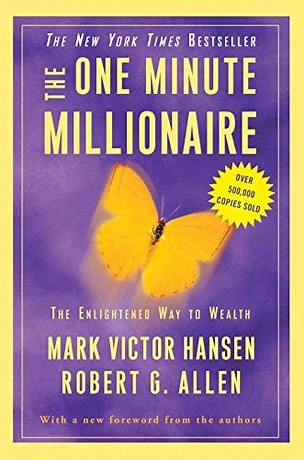


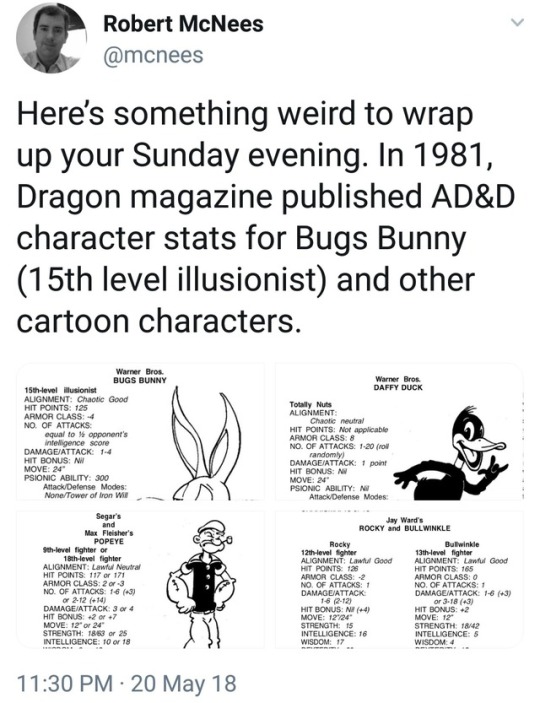
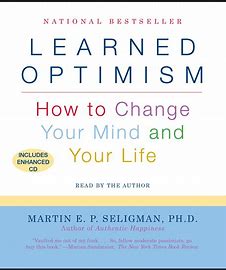
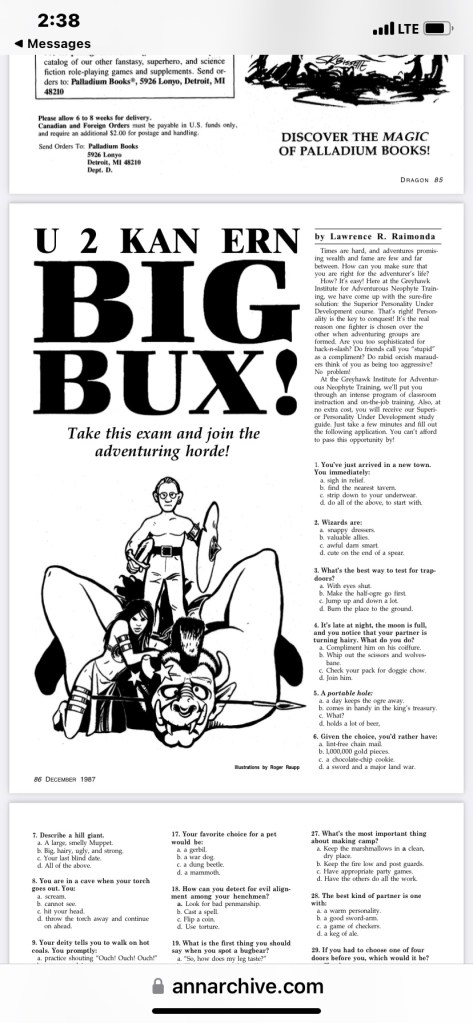

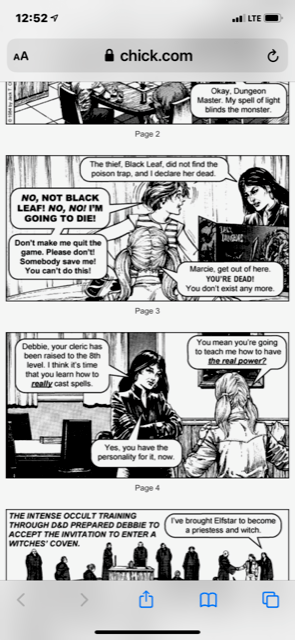
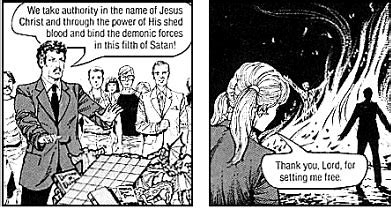
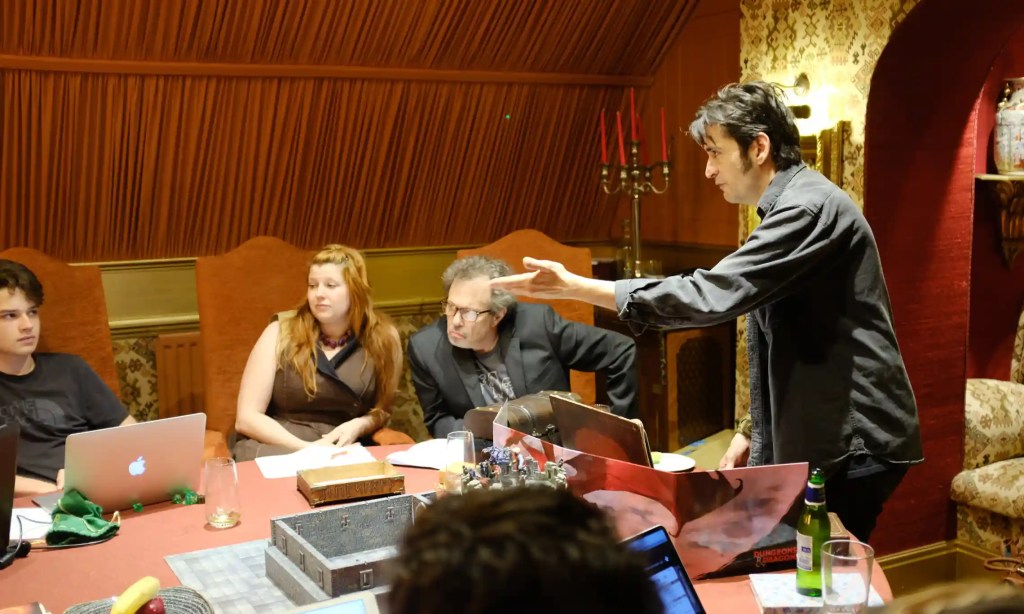
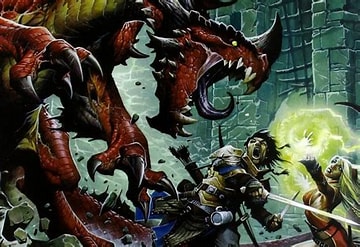
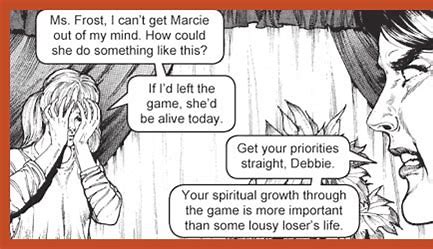

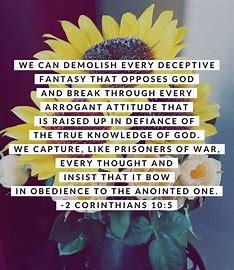








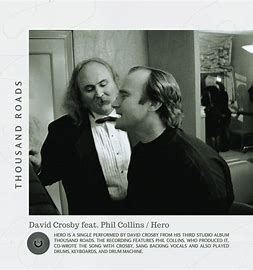
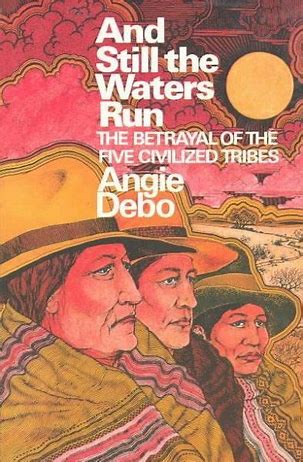


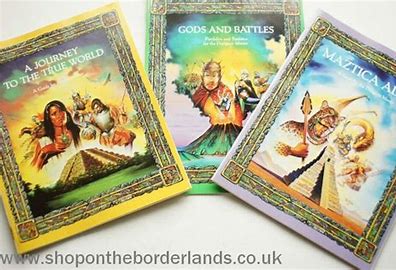
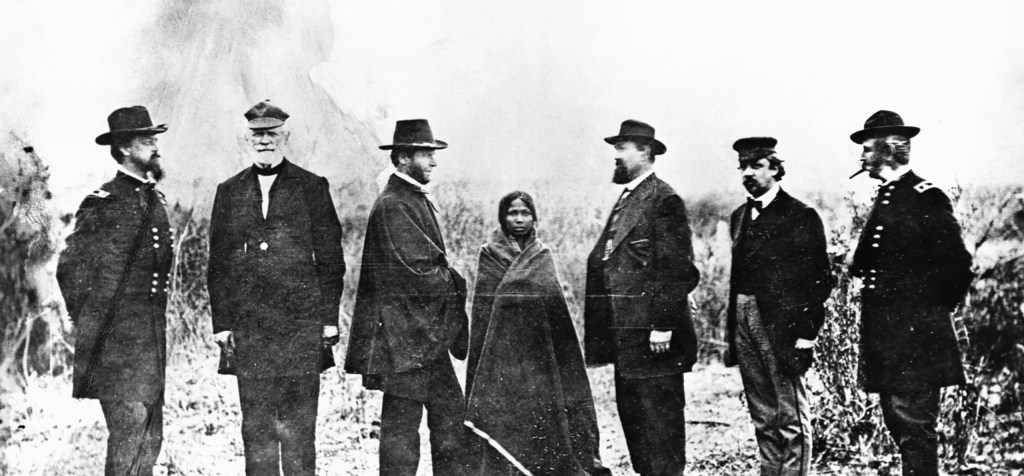

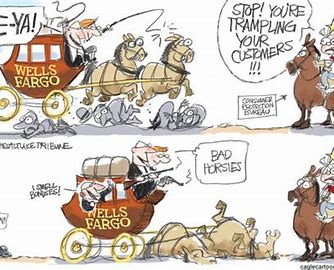

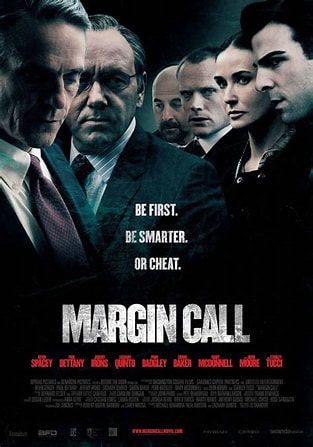
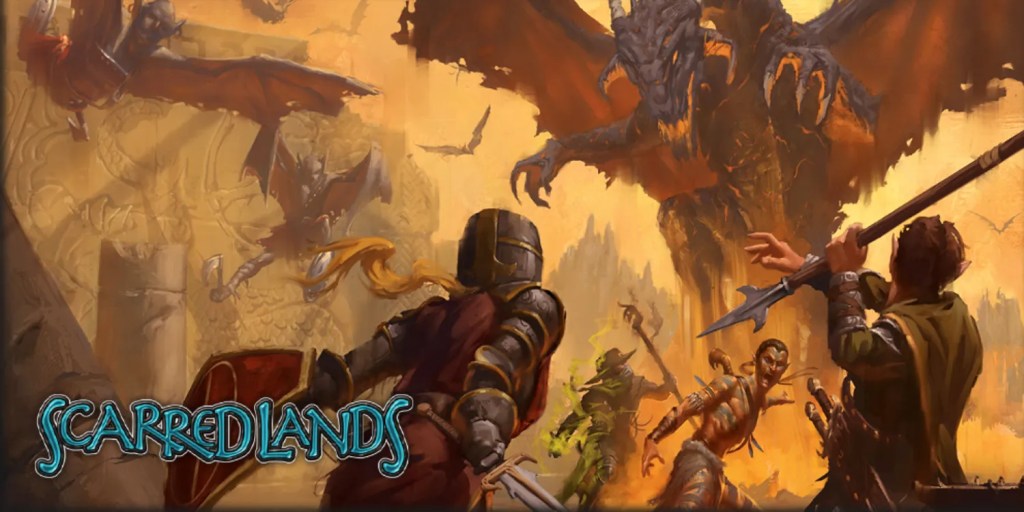
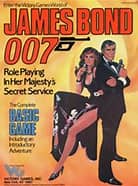
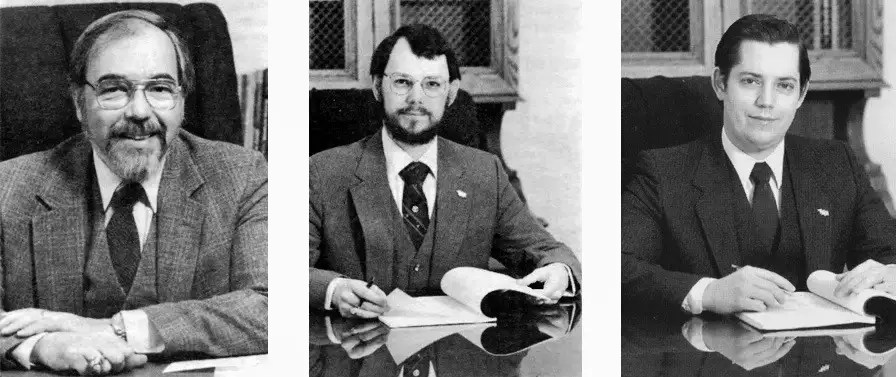
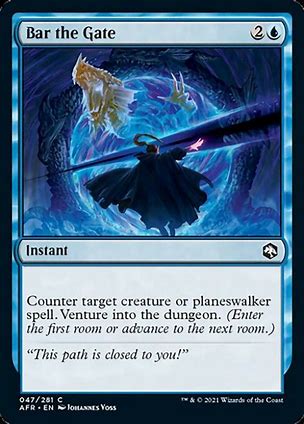
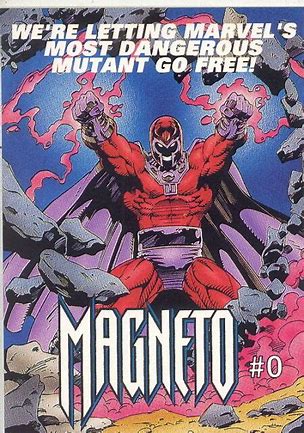


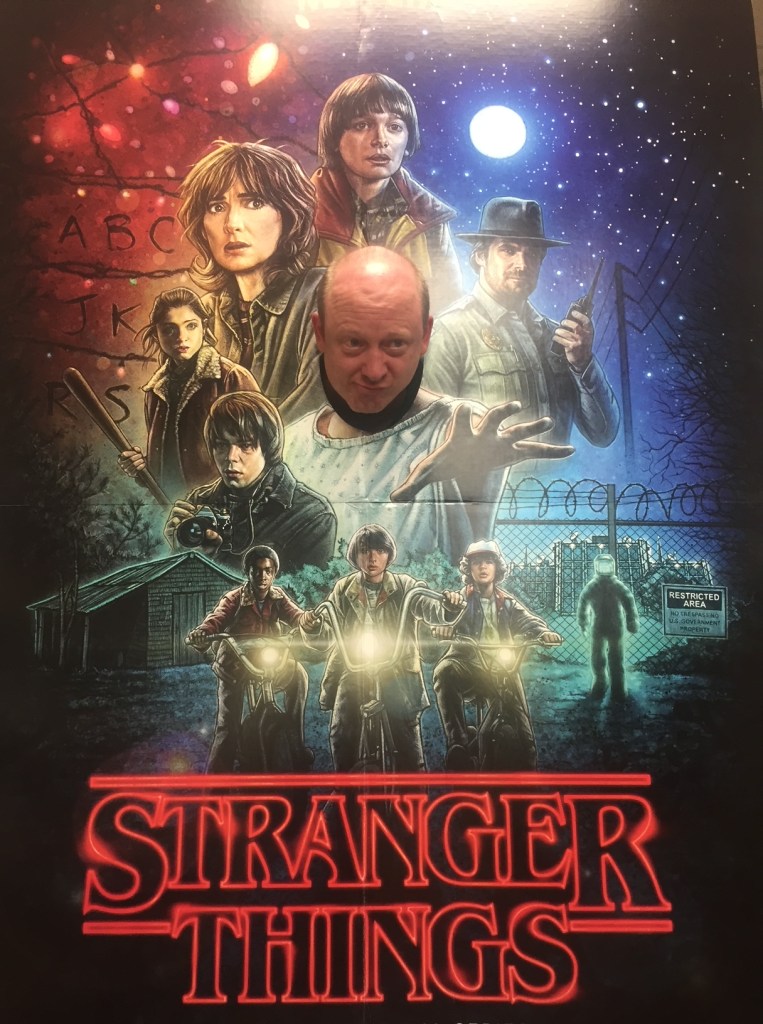
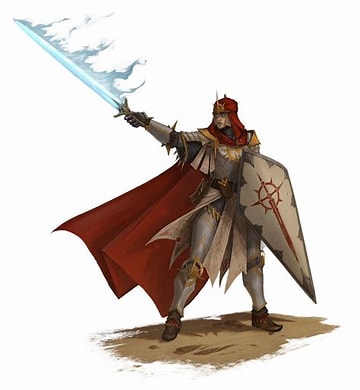
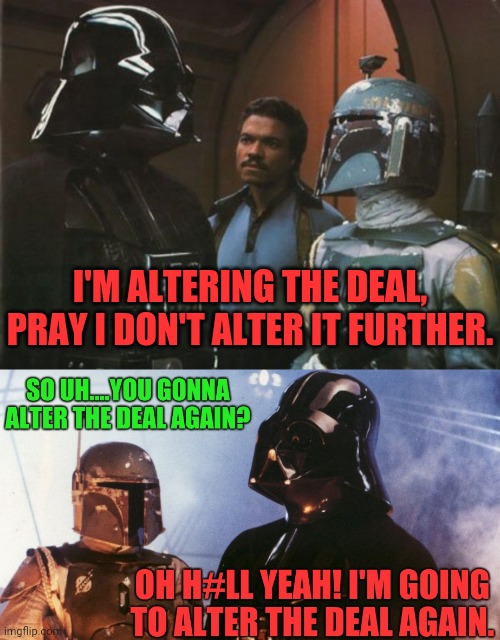


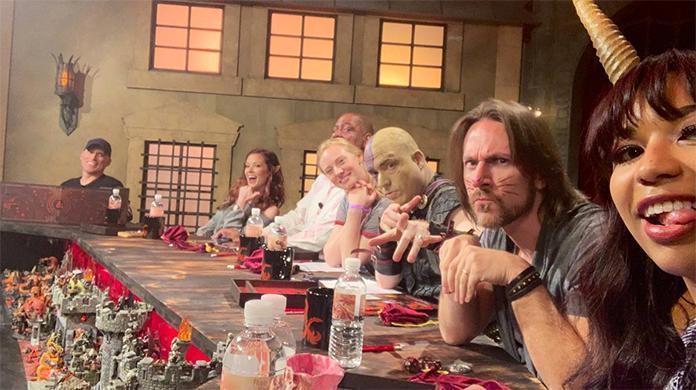

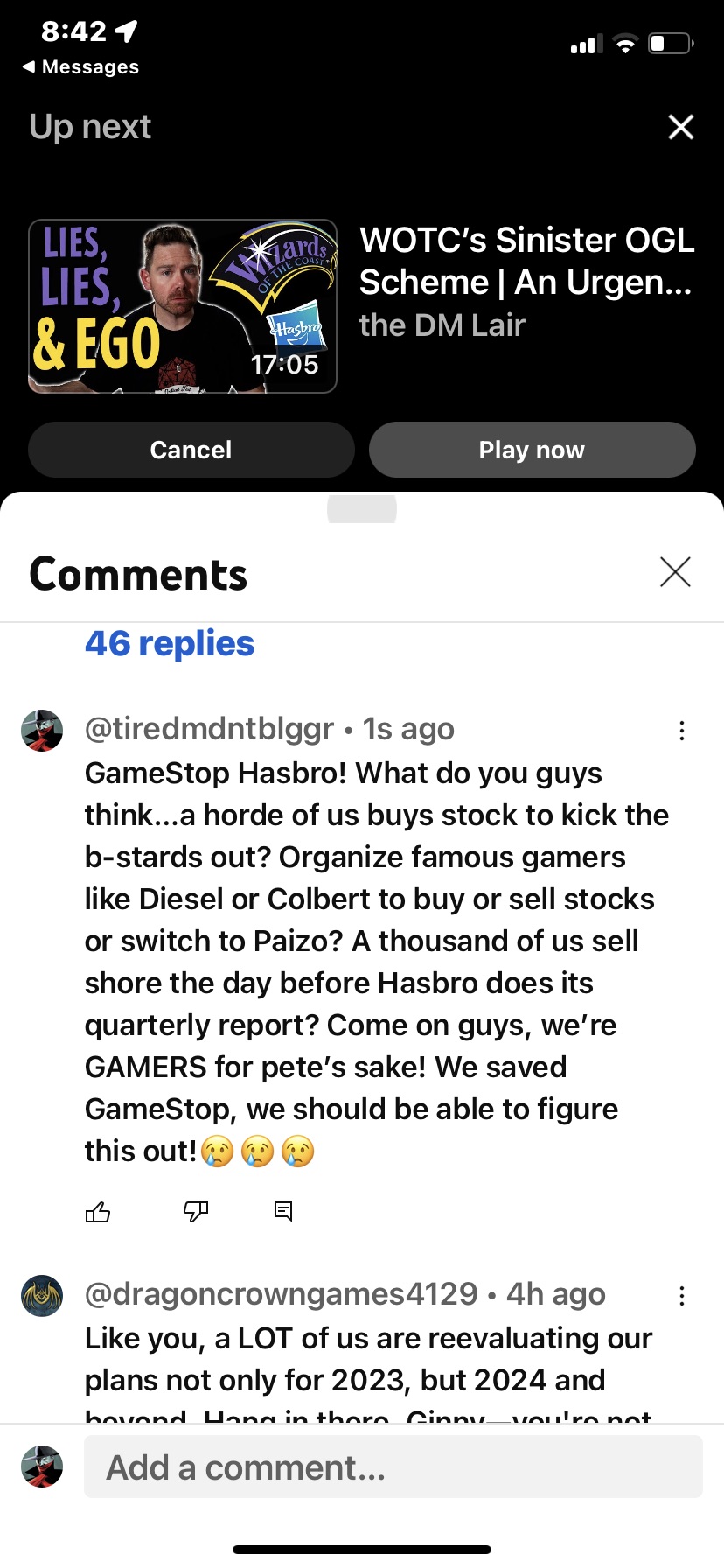
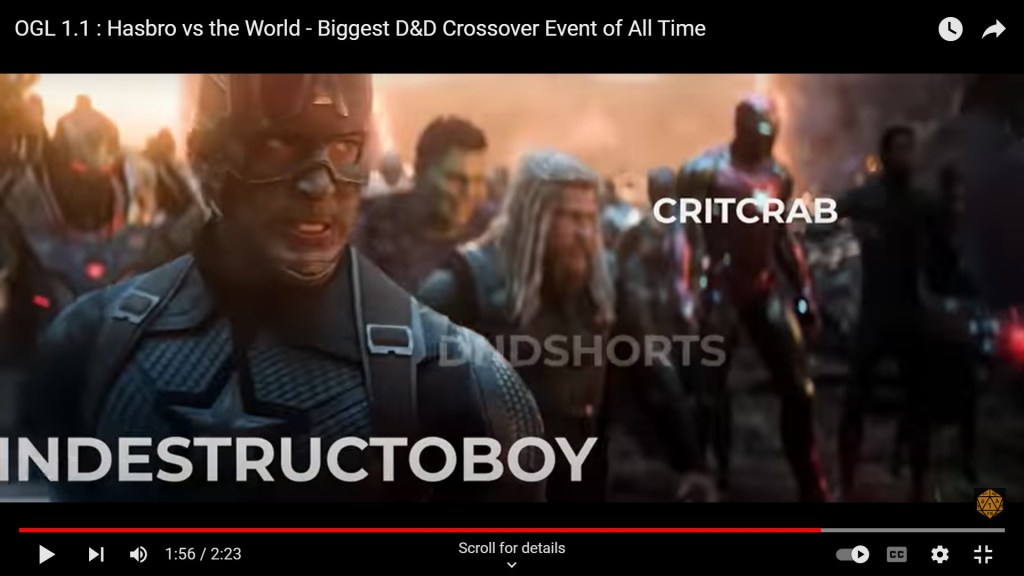
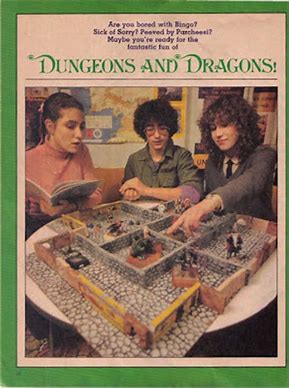
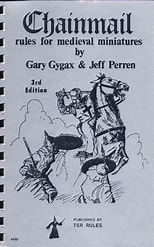
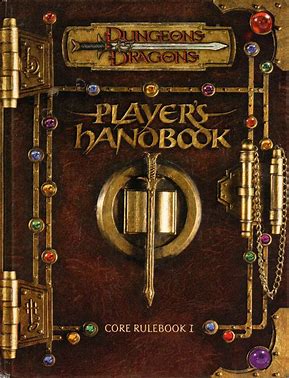

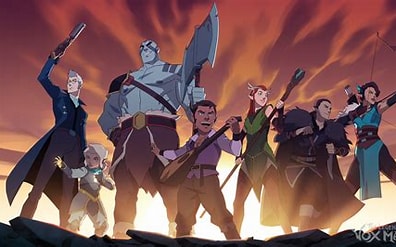

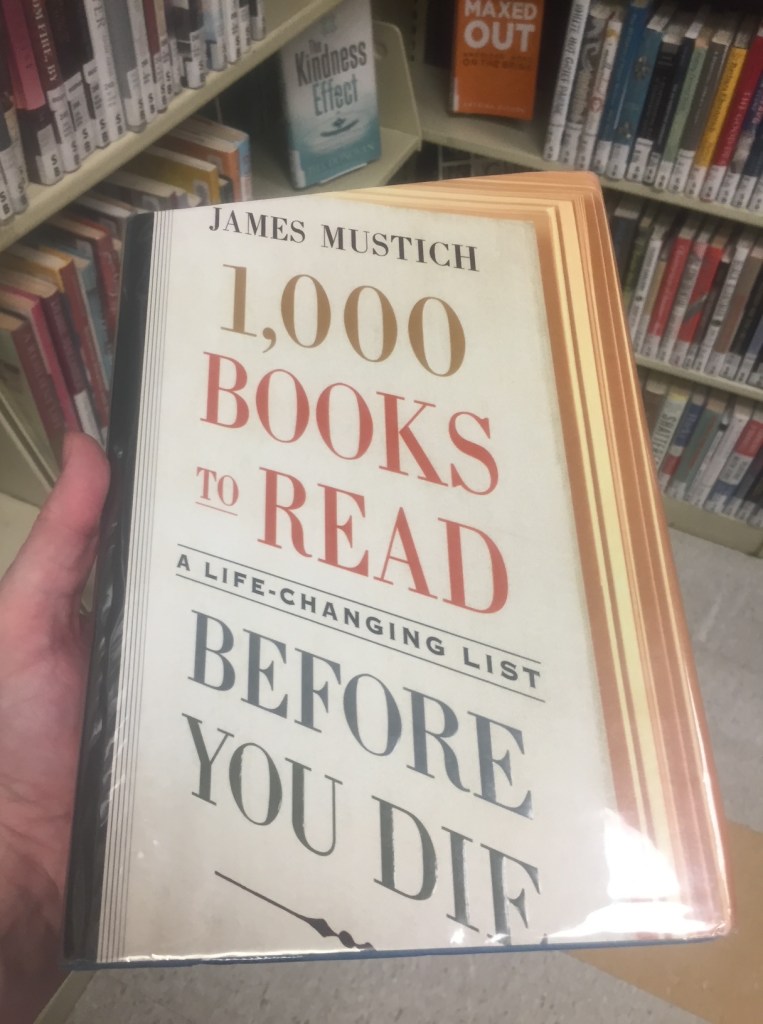
 Tired Midnight Blogger (What Blogs at Midnight)